
 Sep 07,2026
 By:
By: Introduction
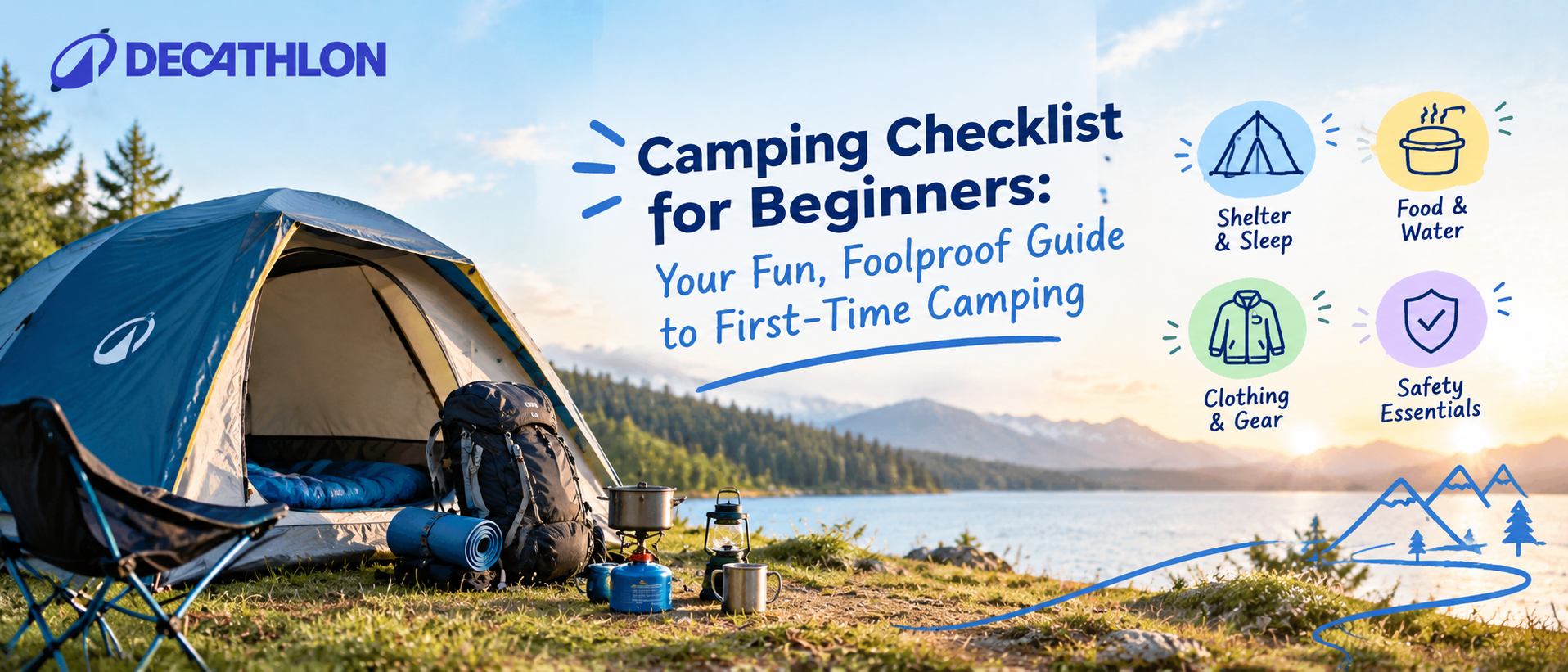
🏕️ Pack Your Gear & Go!So you've decided to go camping. Maybe a friend talked you into it. Maybe you saw a pretty sunset photo on Instagram and thought, "I want that." Whatever the reason, welcome. This camping checklist for beginners is here to make sure you don't show up at a campsite with three flashlights and zero matches (yes, that happens more than you'd think). Camping is one of those things that sounds simple until you're standing in a parking lot at 6 a.m. wondering if you packed the tent poles or left them on your living room floor.
Gear up for your next outdoor adventure with Decathlon, where you'll find practical camping essentials and outdoor gear to help make your first trip comfortable, fun, and stress-free.
Start With Shelter: Tent, Stakes, and a Little Common Sense
Your tent is the backbone of any trip, so let's not mess this up.- Tent (sized for your group, plus one extra person's worth of space if you can swing it)
- Tent stakes and a mallet or hammer
- Ground tarp or footprint, to protect the tent floor
- Extra tent poles, if you have them lying around
- Rainfly, even if the forecast says sunny (forecasts lie)
Sleep System: Because Cold Nights Ruin Everything
Nothing kills the camping vibe faster than shivering at 2 a.m. wondering why you thought a bedsheet would be enough.- Sleeping bag rated for the season (check the temperature rating, not just the price tag)
- Sleeping pad or air mattress
- Pillow, or a stuffed jacket if you're going minimal
- Extra blanket, just in case
Camping Essentials for Cooking and Food
Food is where camping trips either shine or completely fall apart. Here's what belongs on your list of camping essentials for the kitchen side of things.- Portable stove or grill, plus fuel
- Matches or a lighter (bring two, seriously)
- Cooler with ice packs
- Cookware: pot, pan, and a spatula that doesn't melt
- Plates, cups, and utensils (reusable ones cut down on trash)
- Cooking oil, salt, pepper, basic seasonings
- A can opener. I mean it.
- Trash bags, because leave no trace is a real thing and also just good manners
- Water, and more water than you think you need
Clothing: Layers Are Your Best Friend
Weather at a campsite can flip on you fast. Sunny afternoon, freezing night, maybe a surprise drizzle somewhere in between. Pack in layers.- Moisture-wicking base layers
- A warm mid-layer (fleece works great)
- Waterproof or water-resistant outer layer
- Sturdy hiking boots or shoes you've already broken in (never wear brand new shoes on a trip)
- Extra socks. Always extra socks.
- A hat for sun, and a beanie for cold nights
- Gloves, if you're camping somewhere that gets chilly after dark
Safety and Navigation Items You Shouldn't Skip
This part isn't the fun part, but it's the part that keeps the fun part actually fun.- First aid kit (bandages, antiseptic, pain relievers, tweezers, the basics)
- Flashlight or headlamp, with extra batteries
- Multi-tool or pocket knife
- Map of the area, even if you have a phone (phones die, paper doesn't)
- Whistle, for emergencies
- Sunscreen and bug spray
- Any personal medications you take regularly
Small Comfort Items People Always Forget
These aren't life or death, but they make a trip feel less like survival mode and more like an actual getaway.- Camp chairs
- A book, cards, or some kind of low-effort entertainment
- Portable charger for your phone
- Toiletries: toothbrush, toothpaste, hand sanitizer, wet wipes
- Toilet paper (in a sealed bag, trust me)
- Duct tape, because duct tape fixes almost everything
Building Your Personal Camping Checklist for Beginners
Everyone's trip looks a little different depending on where you're going, how long you're staying, and who's tagging along. A weekend at a car-accessible campground needs less gear than a multi-day backpacking trip. So use this guide as your foundation, then adjust.A simple way to build your own camping checklist for beginners is to break it into categories: shelter, sleep, food, clothing, safety, and comfort. Go category by category instead of trying to remember everything at once. Trying to pack from memory is exactly how people forget the tent stakes or the bug spray. Ask me how I know.
Final Thoughts
Camping doesn't need to be complicated, even though the first trip can feel overwhelming with all the gear talk. Start with the basics, lean on this camping checklist for beginners, and don't stress about having the fanciest equipment right out of the gate. Half the fun is figuring things out as you go, laughing at the mistakes, and slowly becoming the friend who always remembers the marshmallow sticks. Pack smart, stay warm, bring extra socks, and you'll be fine. More than fine, actually. You'll probably be planning your next trip before you've even left the first one.Looking for reliable camping gear and outdoor essentials? Explore Decathlon for equipment to help make your next adventure easier and more enjoyable.
🏕️ Pack Your Gear & Go!
Explore the world of fashion, beauty, lifestyle, and entertainment with Funandflip – your daily dose of trendy tips, style inspiration, and everything fun, fabulous, and fresh in one place!
Read Our More Blogs
The Anatomy Of A Winning Proposal: Why Most Freelancers Lose The Bid
Seamless Shopping: Why The Primeriti App Is Your Best Fashion Ally
LastPass-Secure Password Manager For Everyone
FAQs
1. What is the most important item on a camping checklist for beginners?
Shelter and a reliable sleep system usually top the list. A good tent and a properly rated sleeping bag make the biggest difference in how comfortable your trip feels, especially at night when temperatures drop.
2. How far in advance should I start packing using my beginner camping checklist?
A few days before is usually enough for most short trips. It gives you time to check gear, replace batteries, grab forgotten items from the store, and set up your tent once at home to make sure everything's working.
3. What are some camping essentials people commonly forget?
Can openers, extra socks, duct tape, and a backup light source top the list of things people leave behind. Small items, but they're the ones you'll notice missing the moment you actually need them.