
 Sep 03,2026
 By:
By: Introduction
🚀 Win More Freelance BidsYou spent forty minutes writing that freelance bid proposal. Maybe an hour. You reread it twice, hit send, and then... nothing. No reply. No "thanks but no thanks." Just silence, and that particular kind of silence that makes you refresh your inbox every ten minutes like it's going to change something.
Sound familiar? It should. Most freelancers lose the bid, and not because they're bad at their craft. They lose because their proposal reads like everyone else's proposal. Same greeting. Same as "I have five years of experience." Same closing line about being "excited to work together." Clients skim past it in about eight seconds, sometimes less.
If you're looking for more freelance opportunities, Fiverr can help you connect with clients and showcase your skills.
This post is about what actually separates a freelance bid proposal that gets opened, read, and accepted from the pile of proposals that get archived without a second glance. And no, it's not about being the cheapest bidder. That's a myth we'll get to later.
Mistake 1: Leading With Yourself Instead of Their Problem
Open ten freelance proposals on any bidding platform and at least seven will start with "Hi, I am a professional graphic designer with 6 years of experience..." Stop. Just stop.The client doesn't know you yet. They don't care yet. What they care about, in that exact moment, is whether you get what they're trying to solve. So flip the opening. Start with their problem, restated in your own words, maybe even a small observation they didn't explicitly mention but you noticed anyway.
Something like: "Your job post mentions the checkout page is losing conversions on mobile - I checked your site and noticed the load time on the product page is close to 6 seconds, which could be part of it."
See the difference? That single line does more work than three paragraphs of self-introduction. It tells the client you actually opened their link. You'd be surprised how few freelancers do that.
Mistake 2: Treating Every Proposal Like a Copy-Paste Job
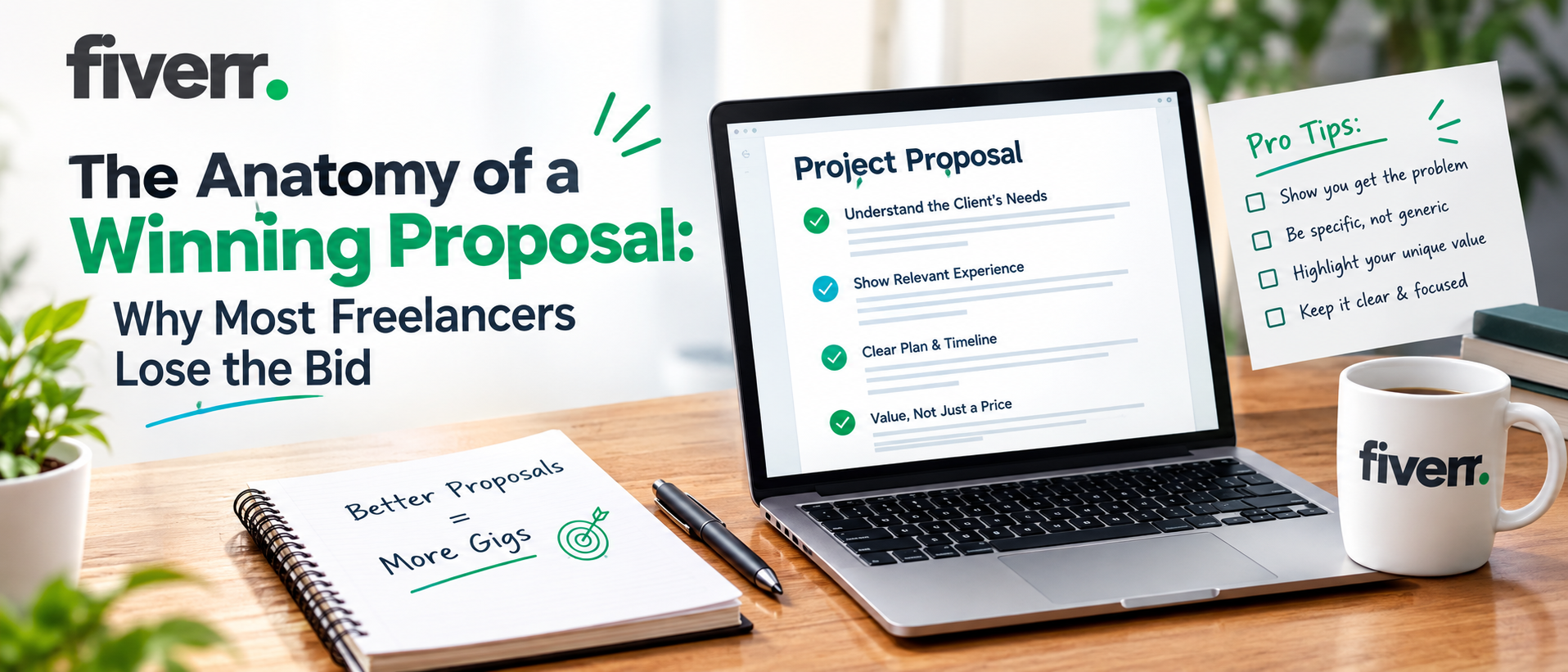
Templates aren't evil. Everyone uses some version of a template, honestly, even the freelancers earning six figures. The problem isn't the template. It's using it without customizing the parts that matter.A freelance bid proposal needs at least three unique elements per job:
- A specific reference to something in their post (a phrase, a goal, a constraint they mentioned)
- A tailored approach or mini-solution, even a rough one
- A reason why you specifically, not just "a good freelancer," fits this particular project
The Psychology Behind Client Decision-Making
Here's something most guides won't tell you. Clients aren't hiring based on logic alone. They're hiring based on reduced anxiety. Freelance work, especially on platforms like Upwork or Fiverr, feels risky to a buyer. They've probably been burned before - a freelancer who ghosted, missed a deadline, delivered something mediocre.So your proposal has one unspoken job beneath the obvious one: make the client feel safe. That means clarity over cleverness. It means showing your process, even briefly. It means addressing potential concerns before they're even raised, like "I typically share a draft within 48 hours so we can course-correct early if needed."
This is a proposal writing psychology in action, and it matters more than most people give it credit for. A confident, structured proposal signals reliability. A rushed, vague one signals the opposite, even if your actual skills are excellent.
Pricing: The Part Everyone Gets Wrong
Let's talk about pricing because I know it's the part everyone's anxious about. Should you go low to win the bid? Higher to seem premium? Match the client's budget exactly?Honestly, there's no single right answer, but there are wrong ones. Undercutting yourself signals desperation, and clients pick up on that faster than you'd expect. On the flip side, quoting way above market without justifying it just gets you ignored.
What works better: anchor your price to outcomes, not hours. Instead of "$40/hour," try framing it as "this project will likely take 15-20 hours, landing around $700, and here's what you'll walk away with." Clients relate to outcomes. Hourly rates feel abstract to someone who's never freelanced themselves.
Also, and this is small but it matters, don't be the freelancer who gives three vague pricing tiers without explaining what changes between them. If you offer packages, be specific about what's actually different. Confusing pricing kills more bids than expensive pricing does.
Formatting Your Proposal So It Actually Gets Read
Client attention spans on bidding platforms are brutal. They're scrolling through dozens, sometimes hundreds, of freelance proposals in one sitting. A wall of text is an instant skip.Break your proposal into digestible chunks:
- A one or two-line opening that references their specific problem
- A short paragraph (three to four sentences max) showing your understanding and approach
- A brief mention of relevant experience, ideally with a number or result attached
- A clear next step or question that invites a reply
Portfolio Links: Less Is More
Freelancers love dumping five portfolio links into a proposal, hoping quantity impresses. It usually does the opposite. Clients don't have time to click through five projects. Pick one, maybe two, that closely match what they're asking for, and briefly explain why it's relevant.If you don't have a directly relevant sample, don't panic. Adjacent work still counts, as long as you connect the dots for the client instead of expecting them to do it themselves.
Client Communication Style: Read the Room
Not every client wants the same tone. A startup founder posting in casual language probably wants a proposal that matches that energy - a bit more direct, less corporate. A larger company or agency posting a formal RFP likely expects more structured, professional language.This sounds obvious, but so many freelancers send the exact same tone regardless of who's reading it. Mirroring the client's communication style, even subtly, builds rapport before you've even had a call. It's a small thing. It works surprisingly well.
Why Most Freelancers Actually Lose the Bid
Let's circle back to the title, because I think it deserves a direct answer. Most freelancers lose the bid for one of these reasons, usually a mix:- They talk about themselves before addressing the client's problem
- Their proposal could apply to any job, not just this one
- They compete purely on price instead of value
- They format proposals as dense paragraphs nobody wants to read
- They forget to end with something that invites a response
A Quick Example: Before and After
Weak version: "Hello, I am a content writer with 4 years of experience. I have worked with many clients and delivered quality content on time. I would love to work on your project. Please check my portfolio attached below."Stronger version: "Your post mentions you need blog content that ranks for 'sustainable packaging solutions' - I looked at your current blog and noticed most posts are under 800 words, which might be limiting how they perform in search. I typically write in the 1500-2000 word range for competitive B2B keywords like this one. Here's a recent piece I wrote for a similar niche [link]. Happy to start with a sample outline if that's helpful before committing to the full project."
Notice how the second version is barely longer, but it does five times the work. It references specifics, shows a small insight, provides social proof, and ends with a low-risk next step.
Final Thoughts
Winning more freelance bids isn't about magic words or a secret template floating around some Facebook group. It's about shifting your proposal from "here's why I'm great" to "here's what I understood about your problem, and here's how I'd approach it." That single shift changes everything about how clients perceive you.A strong freelance bid proposal takes a bit longer to write than a generic one. There's no way around that. But the return on that extra ten minutes is real - higher response rates, better clients, and honestly, less time wasted sending proposals into the void. Slow down on the ones that matter. Skip the ones that don't feel like a fit anyway.
If you're looking for more freelance opportunities, Fiverr is a great platform to showcase your skills, connect with clients, and find projects that match your expertise.
At the end of the day, the freelancers winning consistently aren't always the most talented ones in the pool. They're the ones who write proposals clients actually want to reply to.
🚀 Win More Freelance Bids
Explore the world of fashion, beauty, lifestyle, and entertainment with Funandflip – your daily dose of trendy tips, style inspiration, and everything fun, fabulous, and fresh in one place!
Read Our More Blogs:
Seamless Shopping: Why The Primeriti App Is Your Best Fashion Ally
LastPass-Secure Password Manager For Everyone
What Is Whatnot? Your Fun-First Guide To Live Shopping
FAQs
1. How long should a freelance bid proposal be?
Long enough to show understanding, short enough to actually get read. Most effective proposals fall somewhere between 100 and 200 words. If you're writing more than that, make sure every sentence is earning its place, not just padding the word count.
2. Should I always mention my price in the initial proposal?
Generally, yes, unless the platform or client specifically asks you not to. Vague pricing or "let's discuss on a call" can come across as evasive. A rough estimate, even with a range, builds more trust than dodging the question entirely.
3. Is it worth applying to freelance jobs with dozens of proposals already submitted?
Sometimes, yes. A generic job post with 50 proposals is competitive, sure, but most of those proposals are probably weak, copy-pasted ones. A sharp, specific freelance bid proposal can still stand out even in a crowded list, as long as it does the things a good proposal is supposed to do - address the problem directly, show a bit of thinking, and make the next step easy for the client.