
 Aug 11,2026
 By:
By: Introduction
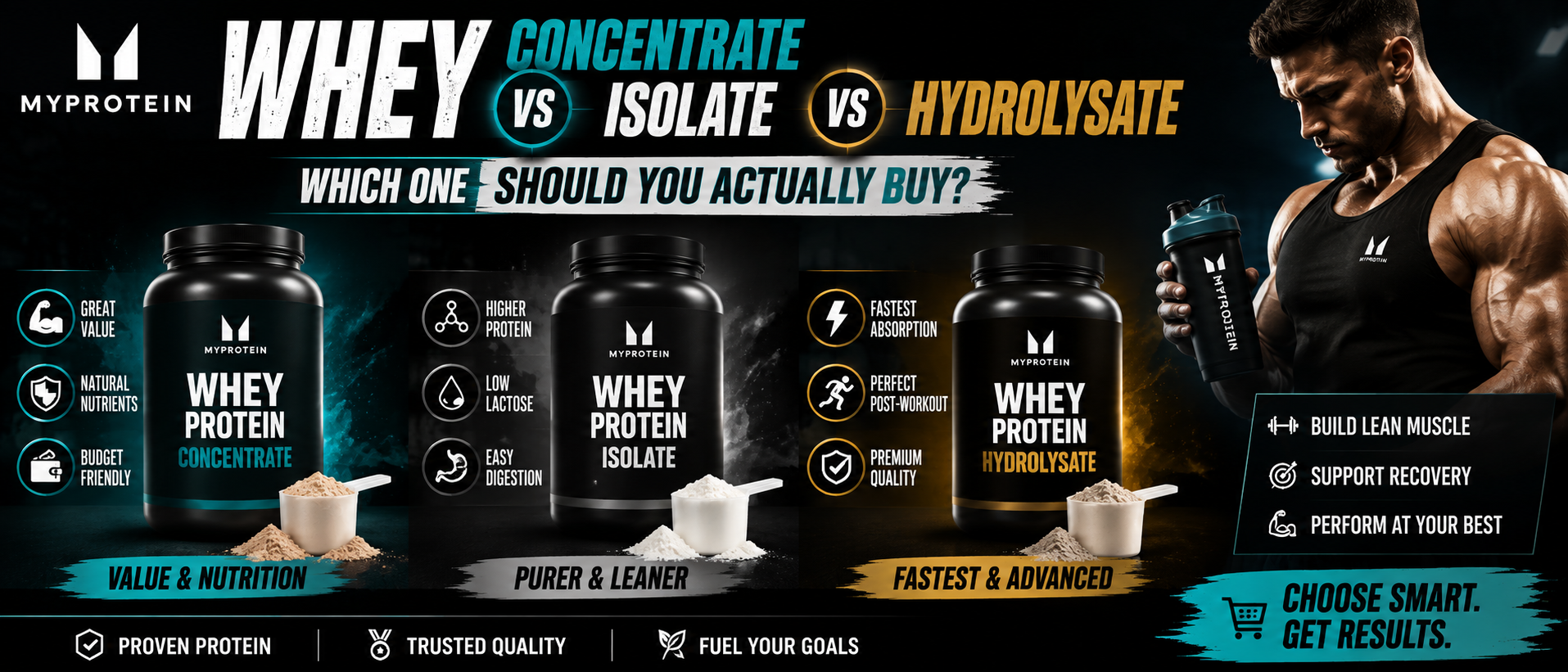
🔥 Fuel Your Gains!So you're standing in front of a supplement shelf (or scrolling through twenty browser tabs at 11 PM, no judgment) trying to figure out which tub of protein powder is worth your money. Whey concentrate vs isolate vs hydrolysate. Three names, three price tags, and honestly? Most labels don't explain the difference in any way that actually helps you decide. They just throw around words like "premium" and "fast-absorbing" and expect you to trust them. If you're looking for a convenient way to increase your daily protein intake, MyProtein offers a wide range of high-quality protein powders, snacks, and supplements to support your fitness and nutrition goals.
I've been there. Bought the wrong tub more than once. Paid extra for isolate when concentrate would've done the job just fine, and also, on a different day, cheaped out on concentrate when my stomach really needed something gentler. So let's actually break this down, properly, without the marketing fluff.
Whey Concentrate Benefits: Why It's Still the Most Popular Choice
Here's the thing nobody tells you upfront. Concentrate isn't "worse" just because it's cheaper. It's the OG, the one most people started with, and there are real whey concentrate benefits that make it worth considering even if you could afford the fancier stuff.It's more affordable. This is the obvious one. Less filtration means lower production cost, and that savings gets passed to you. If you're going through a tub every three to four weeks (some of us go through it faster, no shame), that price difference adds up over months.
It tastes better, generally. I know, taste seems like a silly reason to pick a supplement. But when you're drinking this stuff daily, sometimes twice a day, texture and flavor matter more than people admit. The extra fat content in concentrate actually helps with mouthfeel. Isolate can taste a bit chalky or thin by comparison. Some people don't mind. Others (me, on certain days) really do.
It retains more of the "extras." Concentrate keeps more of the naturally occurring immunoglobulins, growth factors, and bioactive compounds that get stripped out during the isolation process. Research on this is still developing, but some studies suggest these compounds may support immune function. Nothing dramatic, but worth mentioning.
It's good for general fitness goals. If you're not competing, not cutting to a stage-ready body fat percentage, and just trying to hit your daily protein target while building muscle, concentrate does the job. The extra carbs and fats aren't going to sabotage your progress unless you're already tracking macros down to the gram.
The downside? Lactose. Concentrate has more of it, which means if you're even a little lactose intolerant, you might feel it. Bloating, gas, that heavy stomach feeling after a shake. Not fun before or after a workout.
Whey Isolate: The Middle Ground for Serious Lifters
Isolate sits right in between. More refined than concentrate, less processed than hydrolysate. It's become the default choice for a lot of gym regulars, and for good reason.Because it's filtered further, most of the lactose and fat gets removed. That makes it a solid pick if you're lactose sensitive but not fully intolerant. Not a guarantee you'll have zero issues, but a noticeably better shot at it.
Protein per scoop is also higher. You're getting more actual protein and fewer "filler" calories from fat and carbs. If you're cutting, watching your macros closely, or just want a leaner shake, isolate typically wins here.
Absorption is a bit faster too, though not dramatically so compared to hydrolysate. It sits nicely between the two other options: better digestion than concentrate, cheaper than hydrolysate, decent taste, decent macros.
Honestly, for most serious lifters who aren't chasing every last percentage of optimization, isolate is the sweet spot. It's the "I want good quality without overthinking it" option.
Whey Isolate or Hydrolysate: Does the Extra Cost of Hydrolysate Make Sense?
This is where most people get stuck. Whey isolate or hydrolysate, and is the price jump from one to the other actually justified?Hydrolysate goes through an additional process called hydrolysis, where enzymes break the protein into smaller peptide chains before you even open the tub. The idea is that your body doesn't have to do as much work breaking it down, so it absorbs faster and puts less strain on digestion.
Sounds great on paper. And for certain people, it genuinely is great.
Who actually benefits from hydrolysate?
Athletes with very sensitive stomachs. People recovering from illness or surgery who need protein but can't tolerate heavier foods. Competitive bodybuilders in a hardcore cutting phase who want every possible edge around their workout window. Infant formula, actually, uses hydrolyzed protein too, because babies' digestive systems can't handle whole proteins well. That tells you something about how "predigested" this stuff really is.Who probably doesn't need it?
Most regular gym goers. Seriously. If you're training three to five times a week, eating reasonably well, and not chasing marginal performance gains for competition, the absorption speed difference between isolate and hydrolysate isn't going to make or break your results. Muscle protein synthesis doesn't care that much whether your shake kicked in at minute 20 versus minute 25.There's also the taste issue. Hydrolysate tends to taste more bitter because of how the protein has been broken down. Manufacturers add more flavoring to mask it, which sometimes works, sometimes doesn't. I've had hydrolysate shakes that tasted fine and others that were genuinely rough to finish.
And the price. Hydrolysate usually costs noticeably more than isolate, sometimes close to double. For the average person, that premium doesn't translate into a proportional benefit.
So when someone asks me whey isolate or hydrolysate, my honest answer is usually isolate, unless you have a specific medical or performance reason to go further.
Quick Comparison Breakdown
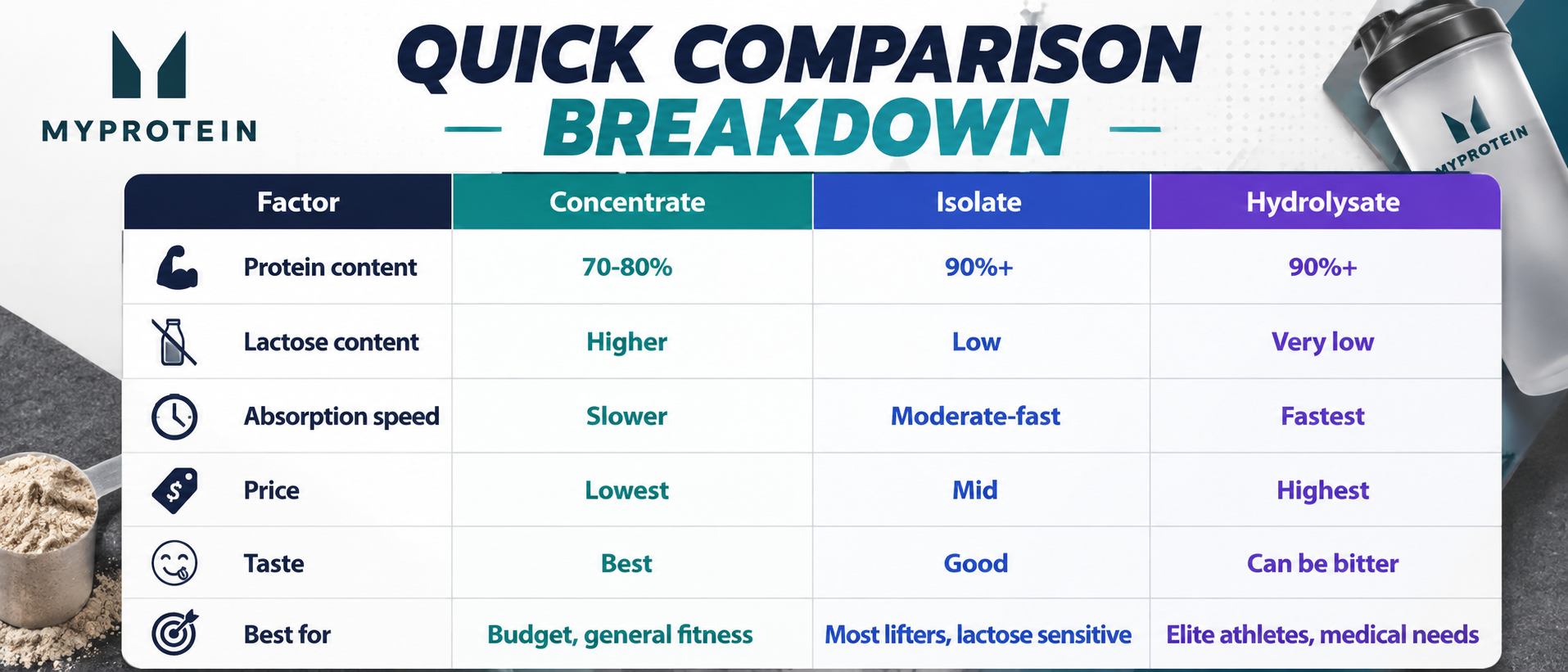
So, Whey Concentrate vs Isolate vs Hydrolysate. What Should You Actually Buy?
If you made it this far, you probably already have a sense of where you fall. But let's put it plainly, because that's what you came here for.Buy concentrate if you're on a budget, don't have digestive issues, and want a protein powder that tastes good without breaking the bank. It's not the "inferior" option, it's just the practical one for a huge chunk of people.
Buy isolate if you want a solid balance. Better macros, easier digestion, still reasonably priced. This is honestly where most people should land, myself included most of the time.
Buy hydrolysate if you've got a specific reason. Severe sensitivity, a competition coming up, or a doctor/coach recommendation. Otherwise, you're mostly paying extra for a marginal edge you probably won't notice day to day.
There's no universal "best" here. Just what fits your body, your goals, and honestly, your wallet.
Final Thoughts
At the end of the day, the whey concentrate vs isolate vs hydrolysate debate isn't really about which one is "superior." It's about matching the product to your actual life. Your digestion, your budget, your training intensity, even your taste preferences, all of that matters more than chasing the most technically advanced option on the shelf.I'll be honest, I switch between concentrate and isolate depending on the month. Tight on budget? Concentrate. Feeling bloated and want something gentler? Isolate. I've tried hydrolysate a handful of times and it's fine, works well, but for my day to day training it never felt necessary. Your mileage may vary though, and that's kind of the whole point of this article. Test, adjust, don't just buy whatever the loudest ad tells you to. Looking for quality whey protein? Check out Myprotein for a range of whey concentrate, isolate, and hydrolysate options to match your fitness goals.
Read the label. Check the protein-per-scoop number, not just the marketing claims on the front. And if your stomach reacts badly to one type, don't force it, just switch. There's no prize for suffering through bloating for the sake of a slightly cheaper tub.
🔥 Fuel Your Gains!
Explore the world of fashion, beauty, lifestyle, and entertainment with Funandflip – your daily dose of trendy tips, style inspiration, and everything fun, fabulous, and fresh in one place!
Read Our More Blogs
What Is A Raised Garden Bed And Why Every Gardener Needs One
Emergent AI For Beginners: A Complete Guide To Building A Website
Adobe Creative Cloud Discounts: Best Adobe Deals, Student Offers & Promo Codes In 2026
FAQs
1. Is whey isolate better than whey concentrate for weight loss?
Isolate tends to have fewer calories from fat and carbs per scoop, which can help if you're tracking macros tightly during a cut. But weight loss ultimately comes down to your overall calorie balance, not which whey type you pick. Concentrate can absolutely fit into a weight loss plan too, as long as you're accounting for its slightly higher calorie count.
2. Can I mix whey concentrate and isolate together?
Yes, actually a lot of people do this without realizing it, since some blended protein powders already combine both. Mixing them yourself is fine too. You get a bit of the better taste and cost-efficiency from concentrate along with the leaner macros from isolate.
3. Does hydrolysate whey actually build muscle faster than isolate or concentrate?
Not really, no. All three provide the essential amino acids your muscles need for growth. The main difference with hydrolysate is digestion speed, not the actual muscle-building potential of the protein itself. Total daily protein intake and consistent training matter far more than which type of whey you're sipping post-workout.