
 Oct 27,2026
 By:
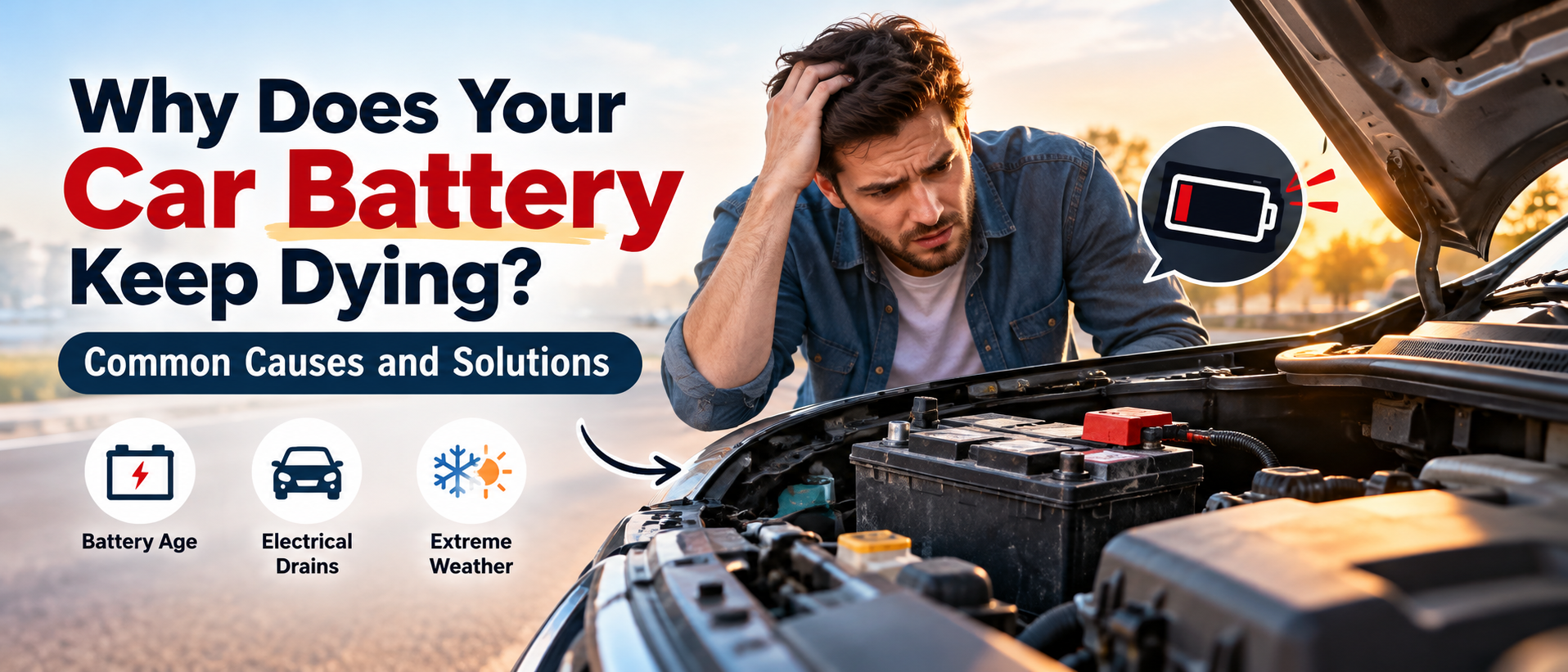
A dead car battery does not always mean you need to buy a replacement. The problem could be caused by leaving the lights on, taking frequent short trips, a faulty charging system, or an electrical component that continues using power after the engine is switched off. Understanding the possible causes can help you identify the problem and decide what to do next.
Why Does My Car Battery Keep Dying?
Your car battery supplies the electrical power needed to start the engine and operate various electrical systems. Once the engine is running, the alternator generally recharges the battery and supplies power to the vehicle's electrical components.When the battery repeatedly loses its charge, something may be preventing it from charging properly or causing it to discharge while the vehicle is parked. In other cases, the battery itself may simply be worn out.
The important thing is to avoid assuming that every starting problem comes from the battery alone. A battery that repeatedly goes flat may be a sign of a wider electrical or mechanical issue that needs attention.
1. Leaving the Headlights or Interior Lights On
One of the simplest reasons a car battery dies is leaving the headlights, cabin lights, or another electrical accessory switched on after parking. These components continue drawing power even when the engine is not running.Modern vehicles often have automatic lights and systems that switch off interior lighting after a certain period. However, not every vehicle offers these features, and some settings or accessories may continue consuming electricity.
If your car struggles to start after being parked overnight, check whether any lights were accidentally left on. A dashboard warning, an illuminated cabin light, or headlights that remain switched on can provide a useful clue.
Although this problem may be easy to prevent, repeatedly allowing a battery to discharge deeply can shorten its lifespan. If the battery no longer holds a charge after one such incident, it may already be weak or damaged.
2. A Weak or Ageing Car Battery
Car batteries do not last forever. Over time, their ability to store electrical energy decreases, making it harder for them to deliver the power needed to start the engine.An ageing battery may work normally on warm days but struggle when temperatures drop. You might notice slower engine cranking, dimmer lights during startup, or the need to jump-start the vehicle more frequently.
Battery life varies depending on the battery type, driving conditions, climate, maintenance, and vehicle usage. Rather than relying only on its age, have the battery tested if it repeatedly loses charge or struggles to start the car.
A professional battery test can help determine whether the battery is still serviceable or needs replacement. Replacing a battery without checking the charging system, however, may not solve the problem if another fault is responsible for repeated discharge.
3. The Alternator Is Not Charging Properly
The alternator helps recharge the battery while the engine runs. If it is not functioning correctly, the battery may gradually lose its charge even when you drive regularly.A faulty alternator can produce symptoms such as a battery warning light, flickering headlights, electrical accessories behaving unpredictably, or a vehicle that stalls after starting. These signs can also have other causes, so they should not be treated as a definitive diagnosis.
If your battery repeatedly dies shortly after being jump-started, the charging system deserves attention. A technician can test the alternator's output and inspect the associated wiring and connections.
Continuing to drive with a failing charging system can leave you stranded when the battery no longer has enough power to operate the vehicle. If warning lights appear alongside serious electrical problems, arrange a safe inspection rather than assuming a new battery will fix everything.
4. A Parasitic Battery Drain
Sometimes a car battery loses power even when all the lights appear to be switched off. This may happen because an electrical component continues drawing current after the vehicle has been parked.This is commonly called a parasitic battery drain. Possible causes include a faulty glove-box light, an aftermarket alarm system, a dash camera that is not configured correctly, a malfunctioning control module, or an accessory connected to the vehicle's electrical system.
A small amount of power consumption is normal because some vehicle systems need electricity while the car is off. The problem occurs when the drain is greater than the vehicle's normal standby requirements.
If your car starts normally after driving but refuses to start after sitting overnight or for several days, ask a qualified technician to perform a parasitic-draw test. Randomly removing fuses or disconnecting electrical components without knowing their purpose can create additional problems.
5. Frequent Short Trips and Infrequent Driving
Your car battery needs sufficient charging time to recover the energy used during startup. If you mostly drive for a few minutes at a time, the charging system may not have enough opportunity to replace that energy, particularly when other electrical systems are being used.Vehicles that remain parked for long periods can experience similar problems. Even when the engine is off, certain systems continue to draw a small amount of power. Over time, that consumption can weaken a battery that is already old or undercharged.
If you use your car infrequently, follow the manufacturer's recommendations for battery maintenance. Depending on the vehicle and battery type, a compatible smart battery maintainer may help when the car must remain parked for extended periods.
Avoid relying on occasional long drives as a guaranteed solution. If the battery repeatedly loses charge, testing it and checking the charging system is more useful than simply driving farther.
6. Corroded or Loose Battery Connections
A battery can be fully charged and still struggle to start a car if its electrical connections are loose, damaged, or corroded.Battery terminals connect the battery to the vehicle's electrical system. Corrosion around these connections can interfere with the flow of current, while loose terminals may cause intermittent starting problems.
You might notice white, bluish, or greenish deposits around the terminals, although not every connection problem is visible. Other symptoms can include clicking when attempting to start the engine or electrical systems that behave inconsistently.
Battery connections should be inspected and cleaned using the correct safety procedures. Avoid touching both terminals with metal tools or handling a damaged battery yourself. If the battery case is cracked, swollen, leaking, or producing an unusual smell, do not attempt to jump-start it; seek professional assistance.
7. Extreme Temperatures Can Affect Battery Performance
Weather can also influence battery performance. Cold temperatures reduce a battery's ability to deliver power, while hot conditions can accelerate internal battery degradation and shorten its service life.That is why a car with an ageing battery may start without difficulty during mild weather but fail during a cold morning or after prolonged exposure to high temperatures.
If your battery problems appear during seasonal temperature changes, have its condition tested rather than assuming the weather is the only cause. A healthy, correctly sized battery and a properly functioning charging system can reduce the likelihood of starting problems.
What Should You Do When Your Car Battery Keeps Dying?
Start by observing when the problem occurs. Does the car fail to start after being parked overnight, after several days without driving, or immediately after a jump-start? These details can help a technician narrow down the likely cause.If the battery is discharged and the vehicle needs a jump-start, follow the owner's manual and use the correct procedure for your vehicle. Some vehicles have designated jump-start terminals, and hybrid or electric vehicles may require specific instructions. Never attempt a jump-start if the battery is damaged, leaking, or swollen.
Once the car starts, do not assume the issue has been resolved. Arrange a battery and charging-system test, particularly if the problem has happened more than once. A professional can check battery condition, alternator performance, terminal connections, and possible electrical drains.
If the battery is repeatedly dying, replacing it may be necessary, but only after determining whether another issue is responsible.
Final Thoughts
A car battery that keeps dying can be inconvenient, but the cause is not always difficult to identify. Leaving lights on, an ageing battery, alternator problems, parasitic electrical drains, short trips, corroded connections, and extreme temperatures can all contribute to starting issues.The best approach is to look for patterns and have the battery and charging system tested instead of replacing parts without a diagnosis. With the right checks and routine maintenance, you can reduce unexpected starting problems and keep your vehicle more reliable.
If your car repeatedly needs a jump-start, treat it as a warning sign rather than a permanent solution. Identifying the underlying problem early may help prevent a more inconvenient breakdown later.