
 Jul 15,2026
 By:
By: Introduction
Style Smarter 🛋️So you finally bought the modular sofa. Now what?
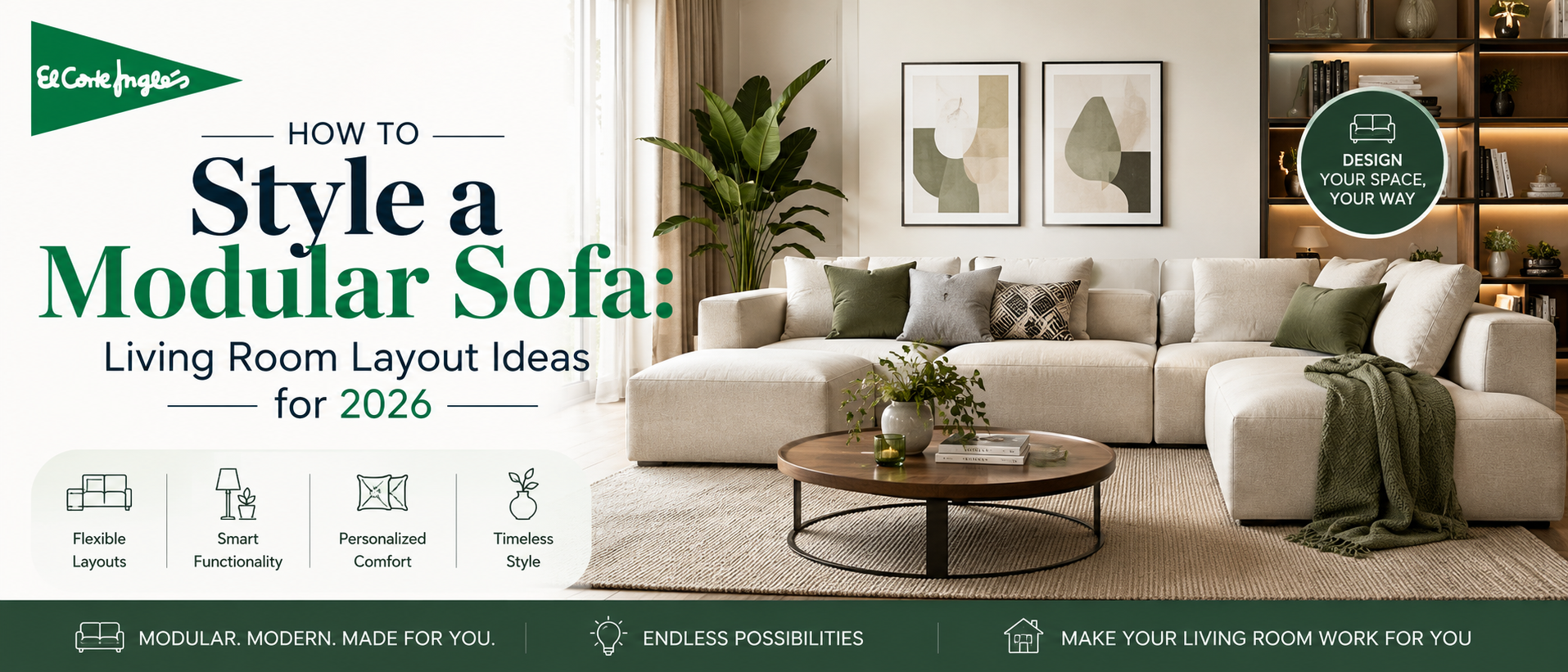
That's the question a lot of people ask right after delivery, when the boxes are gone and the pieces are just sitting there in some random arrangement the movers left them in. If you're hunting for modular sofa living room ideas that actually work in a real space (not just in a showroom with 400 square feet to spare), you're in the right place. Modular sofas are having a real moment in 2026, and for good reason. They bend around awkward corners, they grow with their family, and honestly, they fix a lot of layout problems that a regular three-seater just can't.
If you're looking for stylish modular sofas, modern home furnishings, and décor inspiration, El Corte Inglés offers a wide selection to help you create a living room that suits your space and lifestyle.
But here's the thing nobody tells you when you're buying one: the pieces don't arrange themselves. A modular sofa is only as good as the layout you build around it. Get it wrong and your living room feels like a furniture showroom that lost its map. Get it right and the whole room just... works.
Let's get into it.
Modular Sofa Living Room Ideas: Where to Actually Start
Before you start shoving ottomans and chaise pieces around, figure out the room's main pathway. Every living room has one, whether you've noticed it or not. It's the route people walk when they come in from the hallway, the kitchen, or wherever the front door dumps them.Your modular sofa should never block that path. Sounds obvious, but I've seen so many living rooms where the chaise ends just out right into the walking lane, and suddenly everyone's doing this awkward little side-step every time they cross the room. Not ideal.
Start with the pathway, then build the sofa around it. That's really the whole secret to good living room layout ideas, modular or not.
Know Your Room Shape First
Modular pieces are flexible, sure, but your room isn't. A long rectangular living room needs a different configuration than a square one, and an open-plan space needs something else entirely.Long, narrow rooms: Skip the U-shape here. It'll eat the room alive. Instead, run the sofa along the longer wall and use a single chaise on one end to break up the length visually.
Square rooms: This is where the L-shape or even a full U-shape modular setup really shines. Squares can handle a bigger footprint without feeling cramped, and a wraparound sofa actually makes the space feel more defined.
Open-plan layouts: Here the sofa has to do double duty as a room divider. A modular sectional with the chaise facing away from the kitchen, say, creates a soft boundary without needing a wall. This is honestly one of the most popular sofa styling ideas going into 2026, mostly because open floor plans aren't going anywhere.
Living Room Layout Ideas That Don't Feel Like Everyone Else's Pinterest Board
Everyone's seen the standard "sofa facing the TV, coffee table in the middle" setup. It works, it's fine, but it's also a little... tired.A few layout ideas worth trying:
Angle it: Instead of squaring the sofa dead-on to the TV wall, angle the whole modular unit about 15 to 20 degrees. It opens up a diagonal sightline and makes the room feel bigger than it is.
Float it: If your room's large enough, pull the sofa away from the wall entirely and use the back of it to anchor a reading nook or a small desk area. Floating furniture is one of those living room layout ideas that photographs beautifully but people are scared to actually try at home.
Split the modules: Who says all the pieces have to stay connected? Pull one armless chair or ottoman module away and use it as an accent seat by the window. It still matches, but it breaks the "big blob of sofa" look.
I redid my own living room like this last spring, moved the chaise to the opposite end than where the showroom had it, and honestly it changed how the whole room felt. Brighter somehow. Or maybe that was just the new lamp. Hard to say.
Sofa Styling Ideas for the Cushions and Throws
Okay, the layout's sorted. Now the fun part: styling.Modular sofas, because they're often larger and more geometric, need a slightly different approach to cushions than a traditional sofa does. Too many pillows and the whole thing looks stuffed. Too few and those long, flat modules look bare and a little unfinished.
A good rule: odd numbers. Three or five cushions per main seating section, mixing at least two textures. Think a nubby boucle mixed with a smooth linen, or a velvet accent against a cotton weave. Avoid matching sets straight out of the box. It reads as staged, not styled.
Throws matter too. Drape one loosely over the chaise end or the corner module, not folded into a perfect little rectangle. A slightly rumpled throw looks lived-in. A perfectly folded one looks like nobody's allowed to sit there.
Color and Texture in a Modern Living Room
If your modular sofa is neutral (and let's be honest, most are: beige, grey, that oatmeal color everyone loves right now), the rest of the room has room to play.For a modern living room in 2026, the trend is leaning warm. Terracotta, deep olive, burnt orange, rusty reds. These colors pair really well against a neutral modular sofa without fighting for attention. A single olive accent chair, a rust-colored throw, a stack of terracotta pots by the window. Small doses, big impact.
Rugs matter more than people think with modular sofas too. Because the sofa itself often takes up an irregular footprint, the rug needs to visually "hold" the whole seating area together. As a general guide, all four sofa legs (or at least the front two) should sit on the rug. Floating the rug too small under just the coffee table makes the whole layout look disconnected, like two separate zones instead of one cohesive room.
Lighting Around a Modular Sofa
This one gets skipped constantly. A modular sofa, especially a big L-shaped or U-shaped one, creates its own little pockets of shadow depending on where it sits.A floor lamp behind the chaise end works well for reading light without needing an extra side table crammed in. For the main seating stretch, a pair of table lamps on either end (even if they're on different types of surfaces, like a console on one side and a small stool on the other) balances the light without making the room feel like an airport lounge.
Overhead lighting alone rarely does a modular sofa justice. The scale is just too big for one central light to cover evenly. Layer it: overhead, a floor lamp, maybe a table lamp too. Boring advice, I know, but it's the kind of thing that separates a room that photographs well from a room that actually feels good to sit in at 9pm on a random Tuesday.
Small Living Rooms and Modular Sofas: Can It Even Work?
Short answer: yes, but you have to be smarter about it.For a smaller living room, skip the full U-shape. An L-shaped modular with a slim profile works better, and honestly, sometimes fewer modules is the better call even if it means passing on that extra ottoman piece you liked in the store. Choose a configuration with exposed (not boxy) legs too. It lets light pass underneath and keeps the whole piece from feeling like it's swallowing the floor.
Also, and this feels almost too simple to mention, but keep the chaise end pointed toward the window, not blocking it. Natural light bouncing off a smaller room does more for the space than another cushion ever could.
Final Thoughts
At the end of the day, modular sofa living room ideas aren't really about following a strict formula. They're about understanding your room's shape, your walking paths, your light, and then letting the modular pieces adapt to that, rather than forcing your room to adapt to some showroom configuration that was never built for your space in the first place. Play with the angles. Split a module off if it makes sense. Layer your lighting. And don't be afraid to leave that throw a little wrinkled.If you're looking for stylish, versatile modular sofas and modern home décor to bring these ideas to life, El Corte Inglés offers a wide selection of furniture and home accessories designed to suit every space and lifestyle.
A modular sofa is, by design, meant to change. So don't feel locked into whatever setup you started with. Rearrange it in six months if the room starts to feel stale. That's kind of the whole point of buying one in the first place.
Style Smarter 🛋️
Explore the world of fashion, beauty, lifestyle, and entertainment with Funandflip – your daily dose of trendy tips, style inspiration, and everything fun, fabulous, and fresh in one place!
FAQs
1. What is the best layout for a modular sofa in a small living room?
An L-shaped configuration usually works best in smaller rooms. It gives you the flexibility of a sectional without eating up the whole floor the way a U-shape can. Position the chaise near a window rather than against a wall, and choose a module with exposed legs to keep the room feeling open.
2. Can I split up modular sofa pieces and use them separately?
Yes, and honestly it's one of the more underrated sofa styling ideas out there. You can pull an armless chair or an ottoman module away from the main sofa and use it as a standalone accent seat elsewhere in the room. Just keep the fabric and color consistent so it still reads as part of the same set.
3. How do I stop a modular sofa from blocking the room's walking path?
Map out the natural route people take through the room before you decide on a configuration. Once you know where that pathway runs, arrange the chaise and corner pieces away from it. This one adjustment solves most of the awkward layout problems people run into with modular sofas.