
 Sep 17,2026
 By:
By: Introduction
Find Your Perfect Bike 🚴So you're standing in the shop, maybe scrolling through a website late at night, and the question won't leave you alone: mountain bike vs road bike, which one is actually right for you? It's a fair question. And honestly, a lot of people get it wrong at first, buy the wrong bike, and end up frustrated within a month. We don't want that for you.
If you're comparing bikes and looking for a wide range of cycling gear and options, Decathlon is worth checking out for bikes, accessories, and cycling essentials.
This guide walks through the real differences, not just the spec-sheet stuff, but the everyday things that matter once you're actually out riding. By the end, you'll know exactly which bike deserves your money.
What Makes a Mountain Bike Different
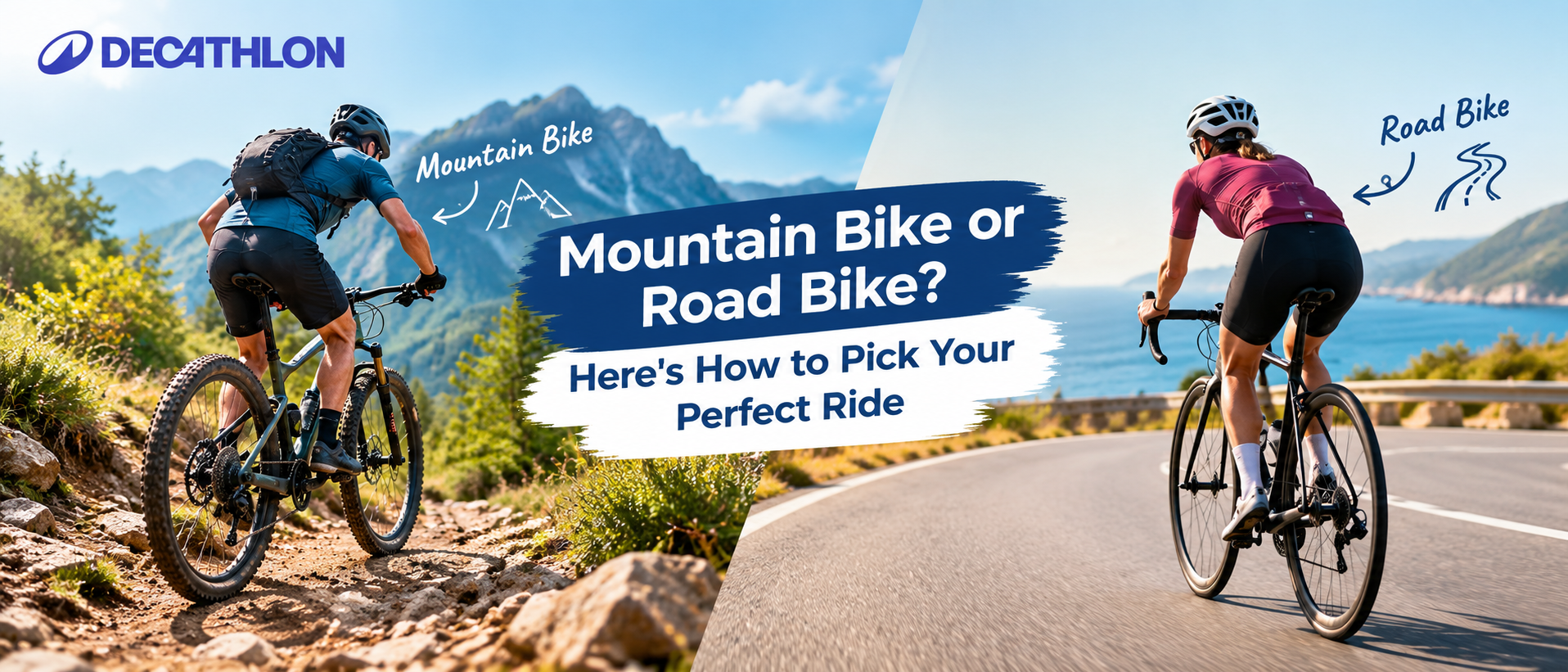
Mountain bikes are the workhorses of off-road cycling. Wide, knobby tires. Sturdy frames. Often some kind of suspension, either just at the front (hardtail) or both front and rear (full suspension). The whole design exists to absorb shock and give you control when the ground underneath you is anything but flat.Tire size plays a massive role here. Mountain bike tires usually run wide, somewhere between 2.1 and 2.6 inches, sometimes even wider for fat bikes. That width does two things. It gives you more surface contact for grip on loose dirt or gravel, and it lets you run lower tire pressure, which soaks up bumps before they reach your spine. Anyone who's ridden a rigid road bike over a pothole knows exactly why that matters.
Mountain Bike Benefits You Might Not Expect
People usually think of mountain bikes purely in terms of trail riding, but the mountain bike benefits go beyond that.- Better stability at low speeds, which is great for beginners still finding their balance.
- Upright riding position, easier on the back and neck for longer, casual rides.
- Tougher build overall, so potholes, curbs, and rough city streets don't scare you.
- Versatility. A hardtail mountain bike can handle a gravel path, a city commute, and a weekend trail without blinking.
What Makes a Road Bike Different
Now flip the picture. Road bikes are all about paved roads and covering distance efficiently. Thin frames, drop handlebars, narrow tires (usually 23 to 32mm), and a riding position that leans you forward to cut through wind resistance. Every gram matters here. Every bit of rolling resistance too.If your goal is speed, distance, or just the pure joy of gliding along a coastal road with almost no effort once you're up to pace, a road bike is going to feel like magic. There's a reason competitive cyclists ride these. The efficiency is unmatched on smooth surfaces.
But take that same bike onto gravel or a rutted trail and things get uncomfortable fast. Thin tires transmit every bump straight into your hands and seat. No suspension to soften the blow. It's simply not what the bike was built for.
Cycling Comfort: The Factor Everyone Underestimates
Here's something a lot of buying guides skip over: cycling comfort isn't just about the saddle. It's the whole package, tire size, frame geometry, riding posture, suspension, all working together.Road bikes prioritize an aerodynamic, forward-leaning posture. Great for speed, not always great for your lower back if you're riding for two hours and you're not used to it. Mountain bikes, on the other hand, put you in a more upright position. Your hands sit higher, your spine isn't curved forward as sharply, and honestly, for a lot of recreational riders, that just feels better.
If comfort is genuinely your top priority, especially if you're getting back into cycling after a break, or you're buying your first bike ever, lean toward the mountain bike or maybe a hybrid. Save the aggressive road bike posture for once you've built up some core strength and know you'll actually use it for serious distance riding.
Tire Size and Why It Changes Everything
We touched on this already, but it deserves its own section because tire size genuinely changes how a bike behaves.Wider tires (mountain bikes) mean:
- More grip on loose or uneven terrain
- Lower pressure options for a softer, more forgiving ride
- Slower rolling speed on pavement, more resistance
- Less rolling resistance, so more speed for the same effort
- Higher pressure, firmer ride
- Much less stability on gravel, sand, or dirt
Best Bike for Cycling: It Depends on Your Actual Routine
There's no universal "best bike for cycling." That phrase gets thrown around a lot, but the honest answer is: the best bike is the one that matches how you actually plan to ride, not how you imagine you might ride someday.Ask yourself:
- Where will 80% of your rides happen? City streets, trails, mixed terrain?
- Do you care more about speed or comfort?
- Are you riding solo for fitness, or with family, or commuting?
- What's your budget, and how much are you willing to spend on maintenance?
A Quick Bicycle Buying Guide: Don't Skip These Steps
Whichever direction you lean, here's a practical bicycle buying guide to keep you from making an expensive mistake.- Step 1: Test ride before you buy: Specs on paper don't tell you how a bike feels under you. Twenty minutes on a test ride tells you more than an hour of reading reviews.
- Step 2: Get the frame size right: A bike that's too big or too small will never feel comfortable, no matter how good the components are. Most shops offer sizing guidance, use it.
- Step 3: Think about maintenance: Mountain bikes with full suspension need more upkeep. Road bikes need regular tire pressure checks and careful handling since components are lighter and more delicate.
- Step 4: Set a realistic budget: Entry-level bikes in either category can absolutely get you started. You don't need the most expensive frame to enjoy cycling. Upgrade later once you know what you actually need.
- Step 5: Consider hybrids if you're torn: If you genuinely can't decide, a hybrid bike blends elements of both, moderate tire width, a mix of comfort and speed. Not perfect at either job, but a solid middle ground for undecided riders.
Hybrid Bikes: The Middle Ground Worth Mentioning
We can't really talk about mountain bike vs road bike without at least mentioning hybrids, because so many riders end up here anyway. Hybrid bikes take the upright comfort and wider tires of a mountain bike and pair them with the lighter frame and faster rolling of a road bike. They're not specialists. They won't dominate a technical trail, and they won't win a road race. But for daily commuting, casual weekend rides, and general fitness, they're honestly a smart pick for a huge number of people.If your riding life doesn't fit neatly into "off-road cycling" or "smooth paved roads only," a hybrid might solve the whole dilemma for you.
Final Thoughts
At the end of the day, the mountain bike vs road bike decision comes down to matching the bike to your life, not the other way around. Off-road cycling demands durability, grip, and comfort over rough terrain, which is exactly what a mountain bike delivers. Paved roads reward speed and efficiency, which is where road bikes truly shine. Think about your typical ride, your comfort needs, your local terrain, and your budget, and the right answer usually becomes pretty obvious.Looking for the right bike or cycling gear? Decathlon offers a wide range of bikes and cycling essentials to help you find a ride that fits your needs.
Don't overthink it too much either. Plenty of riders switch bike types later once they figure out what they actually enjoy. Your first bike doesn't have to be your forever bike. Get out there, start riding, and adjust as you go.
Find Your Perfect Bike 🚴
Explore the world of fashion, beauty, lifestyle, and entertainment with Funandflip – your daily dose of trendy tips, style inspiration, and everything fun, fabulous, and fresh in one place!
Read Our More Blog:
Is Whatnot Safe To Buy From? Here's What Every First-Time Buyer Should Know
Wayfair Coupons & Promo Codes 2026: Get The Best Home Deals & Discounts
Best Times To Visit Normandy, Brittany & Northern Spain By Ferry
FAQs
1. Can I use a mountain bike on paved roads every day?
Yes, absolutely. It won't be as fast as a road bike, and you'll notice more rolling resistance, but plenty of people use mountain bikes for daily commuting on paved roads without any issues. Just know you're trading some speed for comfort and durability.
2. Is a road bike ever a good choice for beginners?
It can be, but it depends on the beginner. If you're already comfortable balancing and you know you'll be riding mostly on smooth roads, a road bike works fine. If you're brand new to cycling in general, a mountain bike or hybrid usually offers an easier, more forgiving learning curve.
3. Do I need a mountain bike if I only ride on gravel paths occasionally?
Not necessarily. Occasional gravel is manageable on a hybrid or even a gravel-specific road bike with slightly wider tires. Full mountain bikes are really built for more demanding, technical off-road cycling, so unless you're regularly tackling rough trails, you might not need the extra weight and complexity.