
 Apr 28,2026
 By:
By: Overview
So you're freelancing—maybe on Fiverr, pitching clients directly, or doing both. And you've hit that strange wall where the work is decent but the pipeline feels... fragile. One client disappears, and suddenly you're refreshing your inbox out of a nervous habit.Here's the thing that nobody says out loud: cold outreach gets exhausting fast. Writing pitches, updating proposals, tracking down leads—it eats time you could spend on actual work. A well-built referral system, though? It does the heavy lifting for you. Quietly. Consistently.
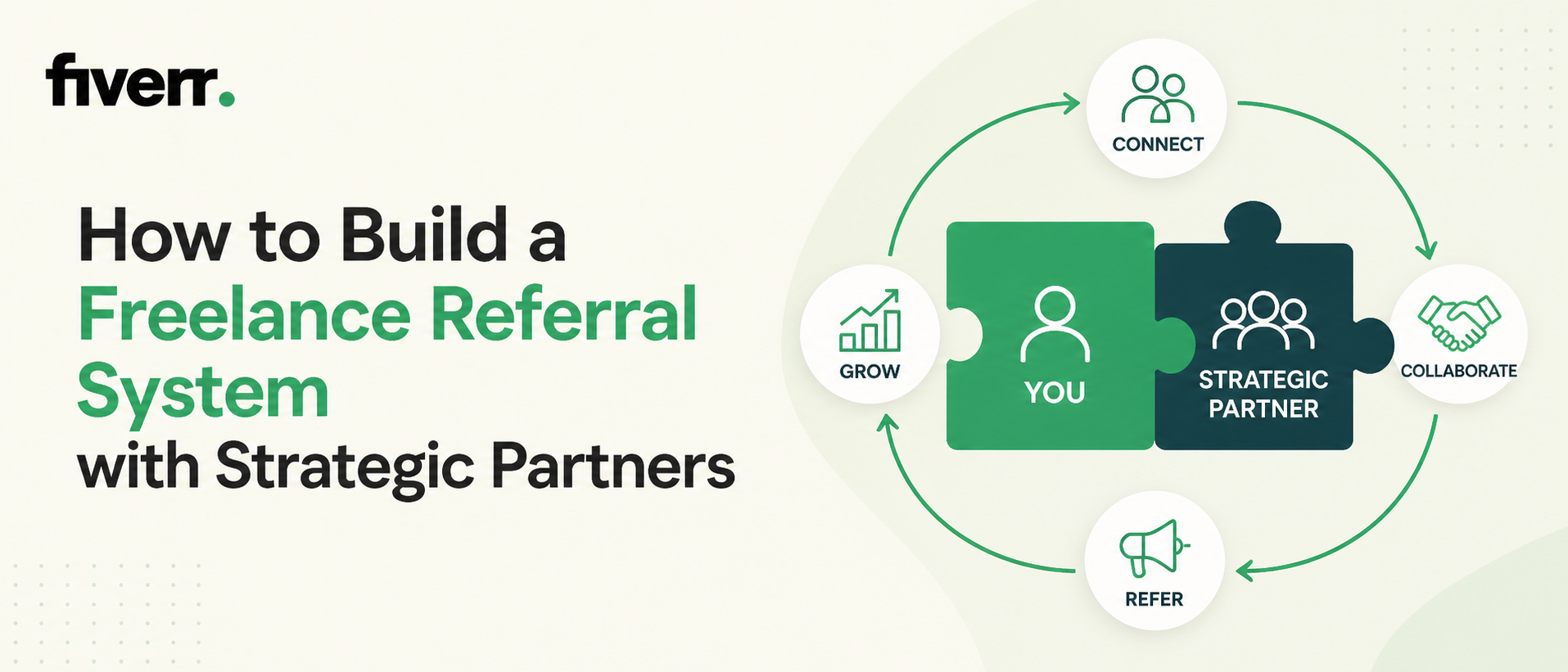
A referral system isn't just "ask happy clients to send friends your way." That's a wish, not a system. Building one with strategic partners—people and businesses that serve the same audience but don't compete with you—is what actually moves the needle. This guide walks through exactly how to do that, step by step, on Fiverr and beyond.
Why a Referral System Beats Every Other Marketing Strategy
Let's be honest. Most freelancers hate marketing.I mean, really hate it. You got into freelancing because you're good at something — design, writing, development, whatever — not because you love selling yourself.Referral marketing sidesteps most of that discomfort. When a strategic partner sends someone your way, that prospect already trusts you a little bit. They came recommended. That changes the entire dynamic of the first conversation.
Stats back this up consistently—referred clients convert faster, spend more, and stick around longer. On platforms like Fiverr, where buyers often scan dozens of sellers before choosing, a warm referral from a trusted source can be the deciding factor. Not your gig description. Not your portfolio. Just: "My friend worked with this person; you should too."
That's the power you're building toward.
Define Your Referral Network Before You Build It
Before reaching out to anyone, get clear on who actually makes sense as a strategic partner. Not every friendly freelancer qualifies.Ask yourself: Who already works with my ideal clients but offers something completely different?
If you're a copywriter, graphic designers are obvious partners. So are web developers, brand strategists, and social media managers. None of them do what you do. All of them talk to clients who might need what you do.
- Make a short list. Maybe ten names to start. These could be:
- Freelancers you've crossed paths with on Fiverr or elsewhere
- Agency owners who occasionally need to outsource overflow work
- Business coaches or consultants who advise the kind of clients you want
- Software companies or tools that serve your niche audience
Build Real Relationships First (Before Asking Anything)
This is where most people mess up. They approach potential partners with a transactional proposal right out of the gate. "Hey, send me clients and I'll send you clients. "And... crickets.Strategic partners aren't vendors. You're not buying their attention. You're building mutual trust over time—which, yeah, takes longer. But it actually works.
So. Start by giving before asking. Comment thoughtfully on their content. Share their work when it's genuinely good. Refer a client to them first—no strings attached—just because it's the right fit. Collaborate on something small.
On Fiverr, this might mean connecting with sellers in adjacent categories through Fiverr's community spaces or finding their social profiles. Reach out. Be a human. Have actual conversations that aren't about business at all.
A relationship where someone genuinely likes you? That's a referral system that sends you clients without you ever having to remind them you exist.
How to Structure Your Referral System for Consistent Results
Okay, so you've got relationships forming. Now you need structure—because 'hoping people remember to recommend you' isn't a system. It's vibes.Here's what an actual referral system looks like:
1. A clear referral message
Your partners need to know exactly what to say when they recommend you. Don't make them figure it out. Give them a sentence or two: "My friend does [X service], and she's really good. Here's her Fiverr profile." Simple, specific, easy to forward.
2. A referral landing point
Where does the referred person land? Your Fiverr gig page needs to be tight—a great title, strong portfolio samples, and a clear service description. First impressions matter because referred clients still vet you.
3. A follow-up loop
When someone sends you a referral, close the loop. Tell them how it went. "Hey, that intro you made turned into a project — thank you so much." This reinforces the behavior and makes partners feel like the effort was worth it.
4. A reciprocal system
Don't just receive referrals — send them. Track who you've referred business to and who's referred business to you. Keep it roughly balanced over time. If one partner is sending you steady work and you haven't returned the favor in months, fix that.
Use Fiverr as Your Central Hub
If you're building your freelance business on Fiverr, good news — the platform is actually set up to support this kind of approach.Your Fiverr profile acts as a credibility anchor. When a strategic partner refers someone to you, they're more likely to send a Fiverr link than anything else—it's verifiable, shows reviews, and has clear pricing. That reduces friction enormously.
Make sure your profile is optimized before you start referral marketing in earnest. That means:
- A professional profile photo and bio that clearly explains what you do and who you help
- Gigs with strong titles that match what referred clients will search for
- At least a few completed orders and positive reviews to establish social proof
Expand with Referral Marketing Tactics That Don't Feel Salesy
There are a few referral marketing moves that work really well in the freelance world — and none of them require awkward cold pitching.Co-create content- Partner with another freelancer to write a blog post, record a short video, or host a simple Q&A. You share audiences. Both parties get exposure. Leads follow naturally.
Bundle services informally- You don't need a formal agreement. Just mention to clients, "I focus on copywriting—if you need design work, I know someone excellent." When the inverse happens, your partner does the same.
Join niche communities together- Whether it's a Slack group, a Discord server, or a LinkedIn community for your industry, show up consistently with your partners. Being visible together creates implicit endorsement.
Offer a small finder's fee (optional but effective)- Some freelancers set up simple arrangements—a percentage of the first project or a flat referral bonus. Not everyone wants monetary incentives, but for some partners, it formalizes the relationship in a good way.
The key with any referral marketing tactic is making it feel natural. Forced referral systems — where everything feels transactional and scripted — tend to collapse after a few months. Organic ones, built on genuine relationships, keep running.
Track What's Working (Without Overcomplicating It)
A simple tracking system is enough. A spreadsheet, honestly. Note down:- Who sent you referrals this month?
- How many turned into paid projects
- How much revenue came from referral sources vs. other channels
- Who you've referred business to recently
On Fiverr, you can also check your gig analytics to see traffic sources — sometimes referral traffic shows up in ways that help you understand which partner is most effective.
Expand Your Strategic Partner Network Over Time
Start small—maybe three to five active partners in your first year. Once that's running smoothly, expand thoughtfully.Look for partners who reach different segments of your audience. If all your current partners work with small e-commerce brands, maybe it's time to connect with someone who serves service-based businesses or SaaS startups.
Also look internationally. Fiverr is a global marketplace, and so is your referral network. A strategic partner in a different time zone might be sending you clients while you sleep. Literally.
Don't chase volume, though. Twenty shallow partnerships are worth less than four deep ones. Keep investing in the relationships that already work.
Final Thoughts
Building a referral system as a freelancer isn't complicated, but it does require patience and consistency. Most people want the shortcut. They want to fire off a message to ten freelancers on Monday and have referrals rolling in by Friday. That's not how this works.The freelancers who build truly sustainable referral systems on Fiverr and beyond are the ones who treat strategic partners like actual people. They give first. They follow up. They send referrals without expecting anything back immediately. Over months and years, that compounds into something powerful — a network that generates leads while you focus on doing great work.
Start with one partner. Build that relationship genuinely. Optimize your Fiverr profile so referred clients convert. Then add one more partner. Rinse, repeat.
Your referral system will grow exactly as fast as your relationships do. And honestly? That's the right speed.
Explore the world of fashion, beauty, lifestyle, and entertainment with Funandflip – your daily dose of trendy tips, style inspiration, and everything fun, fabulous, and fresh in one place!
Fiverr-Focused 💼
Read Our More Blogs
Best Lightweight Breathable Sportswear You Should Try In 2026
Adobe Creative Cloud Apps Explained Guide
What Is A Drywall Sander And Why Do You Need One?
FAQs
Q: How many strategic partners do I need to start?
Honestly, one is enough to begin. Focus on building one strong, reciprocal relationship before expanding. Quality beats quantity — always.
Q: Do I need a formal agreement with my referral partners?
Not necessarily. Most freelance referral partnerships run on mutual goodwill and informal understanding. If you decide to offer monetary incentives, a simple written agreement helps. Otherwise, keep it relaxed.
Q: How do I approach someone to become a referral partner without it being weird?
Don't lead with the ask. Build a relationship first — engage with their work, offer value, maybe refer someone to them. After a few genuine interactions, a casual conversation about mutual referrals feels natural, not transactional.
Q: Can I build a referral system entirely through Fiverr?
Fiverr is a great hub for your freelance identity, but strategic partnerships usually develop through broader channels — LinkedIn, industry communities, social media, direct outreach. Use Fiverr as your credibility anchor and portfolio, and build partnerships across multiple channels.
Q: What if a referral doesn't work out — does it damage my relationship with the partner?
Not if you handle it professionally. Follow up, be transparent, and express appreciation for the referral regardless of the outcome. Strategic partners understand that not every lead converts. What matters is how you communicate.
Q: How long does it take to build a working referral system?
Expect three to six months before referrals start flowing consistently. The first month or two is all relationship-building. After that, if you're nurturing the right partnerships, you'll start to see the referral system working in the background — sometimes without you even prompting it.