
 Apr 27,2026
 By:
By: Overview
So you've decided to tackle a drywall project. Whether it’s a new build or a renovation, at some point you’re going to be standing in front of a wall that looks… rough. Bumpy. Kind of embarrassing, honestly. That's where a drywall sander comes in, and if you've never used one before, let me tell you — it's one of those tools you didn't know you needed until you did.A drywall sander is specifically designed to smooth out drywall surfaces after the joint compound (or 'mud,' as the pros call it) has dried. Whether you're prepping walls for painting or just trying to get that professional-looking finish, the right drywall sander makes an enormous difference. It saves time. It saves effort. And — maybe most importantly — it saves your back.
In this guide from Garvee, we're breaking down everything you need to know about drywall sanders: what they are, the different types, why they matter, and how to choose the right one for your project. Let's get into it.
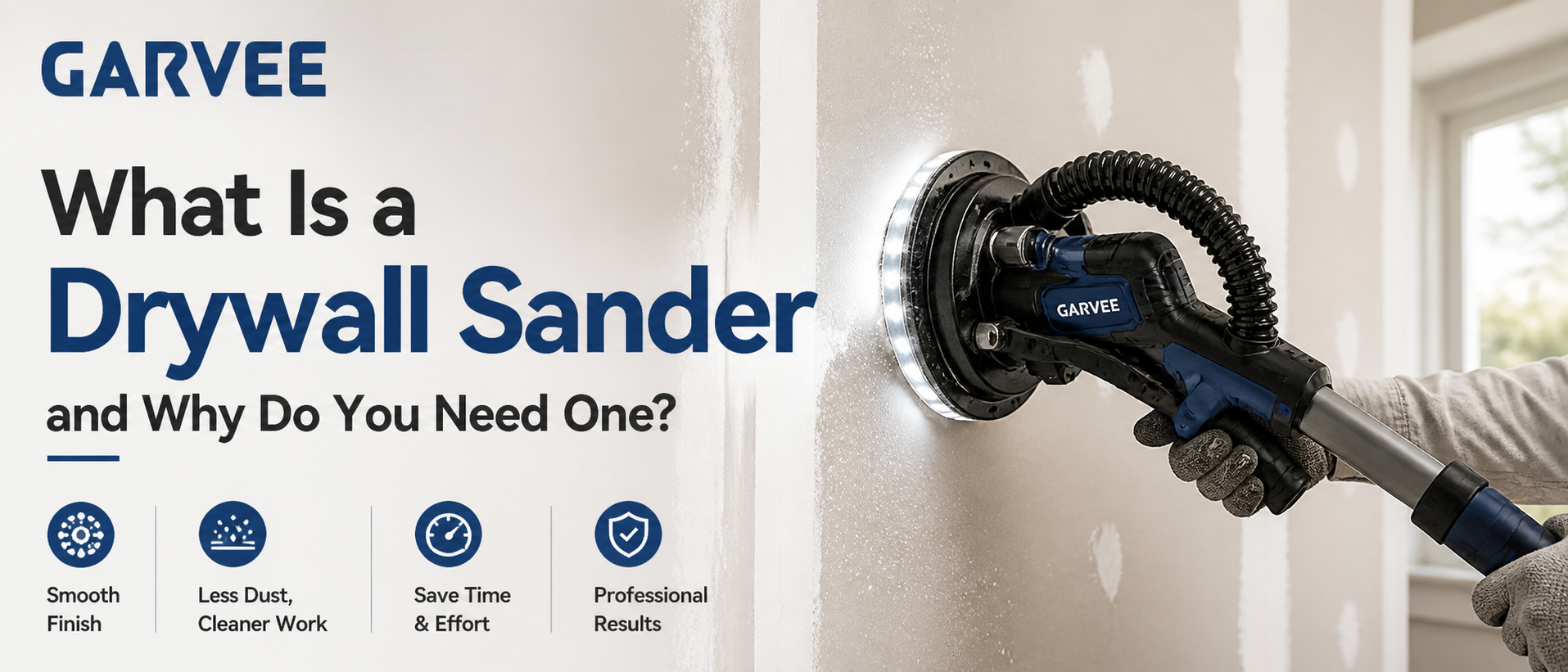
What Is a Drywall Sander?
A drywall sander — also sometimes called a wall sander or sheetrock sander — is a power tool built specifically for sanding drywall surfaces. Unlike a regular orbital sander or belt sander, a drywall sander is designed to handle large flat surfaces quickly and with a lot more control.In simple terms, it’s the difference between scrubbing a wall by hand with sandpaper for three hours versus gliding a machine across it in 30 minutes. Not even close.
Most drywall sanders have a large sanding head — usually round or rectangular — attached to a long pole. That pole matters a lot, especially if you're working on ceilings or high walls. Manual sanding at height is, well, awful. A pole-mounted sander changes everything.
At Garvee, we see a lot of customers come in asking about sanders who have been doing drywall finishing by hand. And every single time, after trying a proper drywall sander, they say the same thing: 'Why didn't I use this from the start?'
Types of Drywall Sanders You Should Know About
There isn’t just one type of drywall sander. Depending on your project, your budget, and how much drywall work you actually do, different types make sense for different people.Pole Sanders (Manual)
These are the most basic option — a sanding pad attached to a long handle. There’s no motor and no dust collection. Just you, the pole, and a lot of elbow grease. They're cheap and pretty effective for small jobs, but honestly? For anything larger than a single room, your arms will hate you by the end.
Electric Drywall Sanders
Now we're talking. An electric drywall sander — sometimes called a power drywall sander — uses a motor to do most of the work. The sanding head spins or oscillates, removing material faster and more evenly than manual methods. These are the go-to for most professional finishers and serious DIYers.
Dustless Drywall Sanders
Drywall dust is notoriously difficult to deal with. It’s fine, white, and gets everywhere — in your lungs, your eyes, even your coffee. A dustless drywall sander connects to a vacuum system and pulls dust away as you sand. If you’re working indoors (which you likely are) , this isn't just nice to have. It's kind of essential.
Ceiling Drywall Sanders
These are specifically designed for overhead work. Extended handles, angled heads, lightweight builds — ceiling sanders are engineered so you don't have to hold your arms above your head for hours. Trust me, your shoulders will thank you.
Why Do You Need a Drywall Sander?
Let’s be practical. Do you technically need a drywall sander, or can you just sand by hand? You can sand by hand. But here's why you probably shouldn't:Speed — An electric drywall sander covers large areas in a fraction of the time. For a typical room, you're looking at hours versus days of work.
Consistency — Hand sanding creates uneven pressure, which means uneven results. A powered sander applies uniform pressure across the entire surface.
Less Physical Strain — Repetitive hand sanding wrecks your wrists, arms, and shoulders. A powered sander does the heavy work for you.
Better Finish Quality — It produces smooth, even walls ready for paint. The difference in final appearance is obvious once you've compared both methods.
Dust Management — The best drywall sanders integrate with vacuum systems to keep your workspace cleaner and the air safer to breathe.
For anyone at Garvee who asks, ‘Do I really need this tool?’ — yes. If you're doing any significant amount of drywall work, a drywall sander isn't a luxury. It's the sensible choice.
How to Use a Drywall Sander Properly
Even the best drywall sander won't help if you use it wrong. A few basics:- Start with the right grit. For rough leveling after taping, use 80-grit. For finishing before paint, switch to 100 or 120-grit. Using a grit that’s too coarse on final passes will leave scratches that show through paint.
- Keep the sander moving. Don't linger in one spot — you'll create low spots or gouges. Smooth, overlapping strokes across the whole surface.
- Check your work with a light. Hold a work light at a low angle (called 'raking light') to reveal any imperfections. It's humbling but necessary.
- Sand in stages. Do a rough pass first, then check, then a fine pass . Rushing leads to redoing.
- Wear a mask. Even with a dustless system, fine particles escape. N95 minimum for drywall dust.
Choosing the Right Drywall Sander for Your Project
There are a lot of options out there. Figuring out which drywall sander is right for you depends on a few things — project size, frequency of use, and budget. Here's a basic breakdown to help narrow it down:- Small repairs or touch-ups: A manual pole sander is probably enough. Add a sanding sponge for detailed work.
- Single room renovation: Consider an entry-level electric drywall sander. The time savings alone are worth the cost.
- Full house build or renovation: Get a variable-speed electric drywall sander with a dust collection attachment. Don't cut corners here.
- Professional or frequent use: Invest in a commercial-grade drywall sander with a built-in vacuum. It'll pay for itself.
Common Mistakes People Make With Drywall Sanders
This list is important—I’ve seen all of these mistakes, sometimes more than once- Skipping grits. Going straight from 60-grit to 120-grit leaves scratches. The intermediate step exists for a reason.
- Not checking the vacuum seal. If your dust collection system isn't properly connected, you lose suction and gain a room full of white powder.
- Over-sanding, especially near seams—you can sand right through the paper face of the drywall. Light passes, then check.
- Wrong sanding disc size. Make sure your replacement discs match your specific sander model.
- Ignoring preparation. Sanding over unfixed nail pops or loose tape doesn't fix them—it worsens them. Fix structural issues first.
Maintenance Tips to Keep Your Drywall Sander Working Well
A decent drywall sander is an investment. Treat it like one.- Clean after every use. Drywall dust is abrasive and gets into motors. A quick blow-out with compressed air after each session extends the tool's life significantly.
- Replace sanding discs regularly. Worn discs don’t sand—they just heat up and smear compounds. New disc, fresh results.
- Check the vacuum connection for blockages. Clogged hoses reduce dust pickup and strain the motor.
- Store it properly. Hang it or keep it in a bag. Leaning it against a wall or letting something fall on it can damage the sanding head.
Final Thoughts
A drywall sander is not the most exciting tool in the shop. A drywall sander will not receive the same enthusiastic response as a new table saw or track saw.. It is truly one of the best tools to have for anybody who does drywall work, professional or DIY.The right drywall sander will save time, protect your health from dust, give a better finish, and make the whole process a lot less physically punishing. Whether you’re patching a single wall or finishing an entire house, there’s a drywall sander for the job and your budget.
At Garvee we stock a full line of drywall sanders and accessories—from basic pole sanders to professional dustless electric models. If you're unsure which one is correct for your project, our team will be delighted to help you determine it. The aim is simple: do the job well without making it more complicated than it needs to be.
Explore the world of fashion, beauty, lifestyle, and entertainment with Funandflip – your daily dose of trendy tips, style inspiration, and everything fun, fabulous, and fresh in one place!
Frequently Asked Questions (FAQs)
Q1: Can I use a regular sander instead of a drywall sander?
You can use a regular orbital sander for small areas or quick touch-ups, but it's not ideal for large-scale drywall work. Drywall sanders are specifically designed for the size, reach, and dust volume involved in wall and ceiling finishing. For any project bigger than a small patch repair, a proper drywall sander is the smarter choice.
Q2: What grit sandpaper should I use on drywall?
For initial rough sanding after joint compound dries, 80-grit works well. For finishing passes before painting, 100 to 120-grit gives you a smooth surface without leaving visible scratch marks. Avoid going too coarse on your final pass — it shows through paint more than people expect.
Q3: Do I really need a dustless drywall sander?
Drywall dust is extremely fine and stays airborne for a long time. It's a real respiratory hazard, and it settles on every surface in the room. A dustless drywall sander connected to a vacuum dramatically reduces airborne particles, protects your lungs, and keeps your workspace cleaner. For any indoor project of meaningful size, the dust collection feature is strongly worth having.
Q4: How do I know when to stop sanding drywall?
The classic test is raking light — hold a work light or flashlight at a very low angle along the wall surface. This side-lighting reveals any ridges, bumps, or low spots that would otherwise be invisible under normal lighting. When the wall looks consistently smooth under raking light and there are no visible seams or tool marks, you're ready for primer. Over-sanding is a real risk, so check often rather than just continuing to sand.