
 Sep 10,2026
 By:
By: Introduction
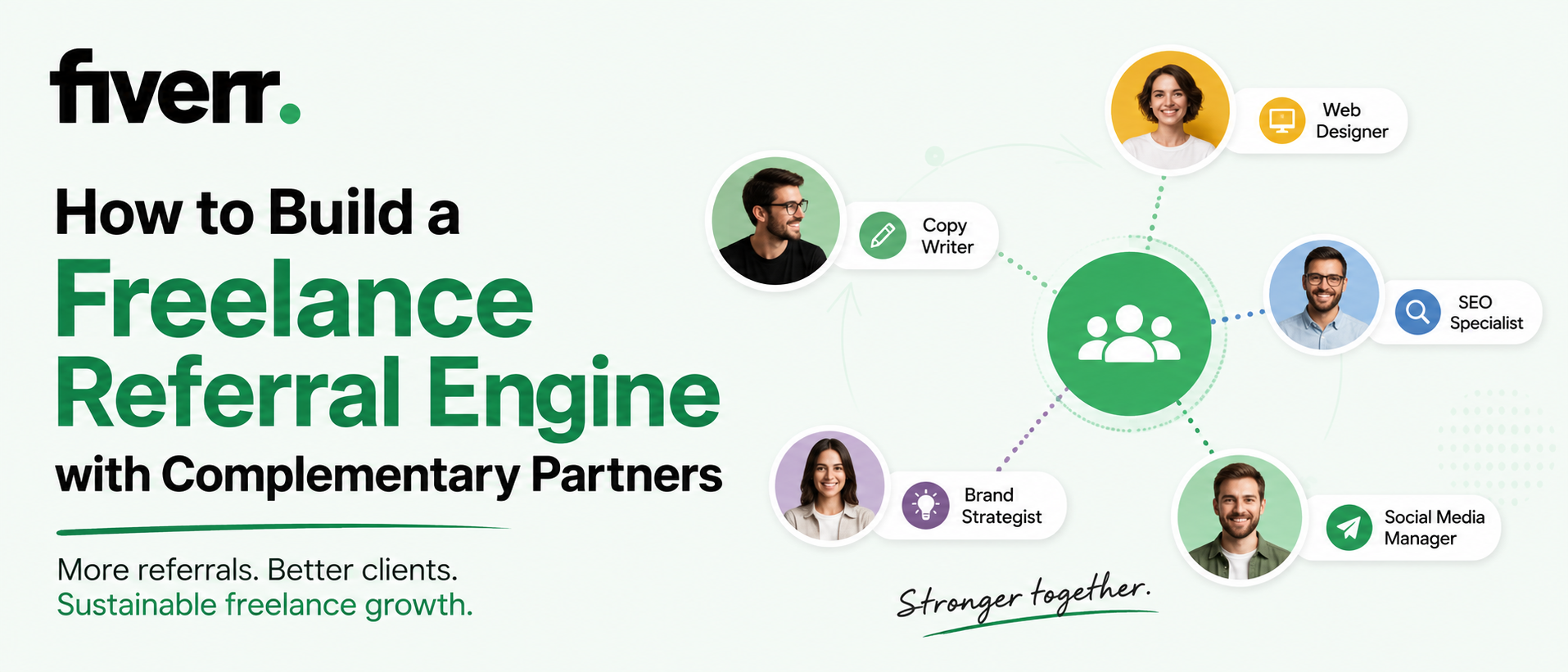
Build Your Referral Network Today 🤝Most freelancers treat referrals like a happy accident. Someone likes your work, mentions your name at a dinner party, and boom, a new client shows up in your inbox. Nice when it happens. Completely unreliable when it doesn't. A real freelance referral engine flips that logic on its head. Instead of waiting around for good luck, you deliberately build a small web of complementary partners who send you work, and you send it right back. It's not glamorous. It's just consistent, and consistent is what pays the bills.
This piece walks through what a freelance referral engine actually looks like, why complementary partnerships beat cold outreach nine times out of ten, and how to set the whole system up without turning it into a second job.
Looking to expand your freelance opportunities? Fiverr connects freelancers with clients and projects across a wide range of creative and professional services.
Why Complementary Partnerships Beat Cold Outreach
Cold outreach is exhausting. You're pitching people who have zero context on you, zero trust, and honestly, zero reason to respond. Response rates hover somewhere between "discouraging" and "why bother." A referral from a trusted partner skips all of that friction. The client already trusts the person recommending you, so you inherit a chunk of that trust before you've even said hello.There's also a compounding effect that cold outreach just doesn't have. Every new partner you add to your network is a standing source of leads, not a one-time pitch. Five solid partnerships, each sending you even one client a quarter, adds up fast. Compare that to sending fifty cold emails and hoping for three lands.
And let's be honest, referred clients tend to be better clients. They come in pre-sold on your value, they negotiate less on price, and they're often easier to work with because the relationship started on a foundation of trust rather than a sales pitch.
Identify Your Ideal Complementary Partners
Before reaching out to anyone, get specific about who actually complements your work. This is where a lot of freelancers rush and end up with partnerships that fizzle.Ask yourself:
- Who serves the same client, at a different point in the project?
- Who has skills that fill the gaps in what I offer?
- Who would a client naturally need right before or right after hiring me?
- A freelance web developer pairs well with a graphic designer, an SEO consultant, and a copywriter.
- A virtual assistant pairs well with a social media manager, a bookkeeper, and a project manager.
- A video editor pairs well with a videographer, a scriptwriter, and a YouTube strategist.
Build Genuine Relationships First
Here's where most people mess it up. They jump straight to "hey, want to refer clients to each other?" without any relationship behind the ask. That feels transactional, and people can smell it a mile away.Spend time first. Comment on their work. Share their content. Grab a virtual coffee (or a real one, if you're local). Ask about their business before you ask for anything. This isn't about being sneaky or strategic in a manipulative sense, it's just how trust actually gets built between two adults who don't know each other yet.
Once there's a real relationship, and once you've seen enough of their work to genuinely believe in it, the referral conversation becomes easy. Almost natural, actually. You're not pitching a scheme. You're just saying out loud what's already true: "I think our clients could use each other."
Formalize the Referral Partnership System
A referral engine without structure tends to fade out after a month or two. Good intentions, no follow-through. To keep it running, put a light system around it.Define What a Good Referral Looks Like
Sit down (virtually or otherwise) and agree on what kind of client is worth referring to. Budget range, project type, timeline expectations. This avoids the awkward situation where your partner sends you someone who can't afford your rates, or worse, someone who was never a good fit to begin with.
Set Up a Simple Tracking Method
You don't need fancy CRM software for this. A shared spreadsheet works fine. Track who referred whom, whether it converted, and what commission (if any) was agreed on. Some freelancers charge a 10 to 15 percent referral fee, others just trade referrals back and forth with no money changing hands. Both models work. Pick whichever fits your relationship and stick with it.
Make the Handoff Smooth
When you refer a client, don't just drop a name and disappear. Write a short, warm introduction email connecting both parties. Something like: "Hey Sarah, meet John. He's the developer I mentioned, and does great work on Shopify builds. John, Sarah needs a site redesign for her bakery business, budget's around $3k." That's it. Thirty seconds of effort that makes the referral feel personal instead of transactional.
Create Referral-Worthy Work (Because None of This Matters Without It)
Honestly, this step should probably be first, but people skip over it because it's less exciting than "strategy." None of the systems above matter if the work itself isn't good. Partners won't keep referring to you if clients come back disappointed. That's just how it goes.So before building out an elaborate referral network, make sure your actual deliverables hold up. Ask past clients for honest feedback. Fix the gaps. Then start building the engine on top of a foundation that can actually support it.
Expand the Network Slowly, Not All at Once
There's a temptation to add every semi-relevant freelancer you meet into your referral circle. Resist it. A referral engine with fifteen loosely connected partners is harder to manage and, frankly, less effective than one with five people you trust completely.Start with two or three complementary partners. Get the system working smoothly. Track results for a few months. Then, if it's going well, add one or two more. Slow growth here beats fast growth, mostly because trust doesn't scale quickly, and referrals live or die on trust.
Nurture the Relationship Over Time
A referral partnership isn't a one-and-done handshake. It needs occasional maintenance, the same way any professional relationship does. Check in every couple of months. Share how their referrals turned out. Celebrate wins together. If a referral didn't go well, say so honestly rather than letting it quietly fade.Small gestures matter more than people expect. A quick thank-you message after a good referral. A shoutout on LinkedIn. Sending them business even when you don't strictly "have to." These things keep the freelance referral engine warm instead of letting it go cold, which, left unattended, it absolutely will.
Common Mistakes That Sabotage a Freelance Referral Engine
A few patterns show up again and again:- Only asking, never giving. If you're always on the receiving end of referrals and rarely sending any back, the relationship tips out of balance fast.
- Referring to the wrong fit just to keep the relationship going. This backfires. A bad referral damages trust more than no referral at all.
- Ignoring follow-up. Sending a referral and never checking whether it worked out is a missed opportunity to strengthen the bond.
- Spreading too thin. Trying to maintain twenty loose partnerships instead of five strong ones.
Final Thoughts
Building a freelance referral engine isn't about clever tactics or growth hacks. It's slower than that, and honestly more human. You find people whose work sits next to yours, you build real trust with them, you set up a light system so referrals don't get lost in the shuffle, and you keep showing up for each other over time. Do that consistently, and the engine runs quietly in the background, sending steady, warm leads your way without the exhausting grind of cold outreach. Start small. Pick two or three complementary partners this month. The freelance referral engine you build from there might end up being the most reliable source of clients you've got.If you're looking to connect with skilled professionals who can complement your services, Fiverr can help you find freelancers with expertise across a wide range of creative, business, and digital services.
Build Your Referral Network Today 🤝
Explore the world of fashion, beauty, lifestyle, and entertainment with Funandflip – your daily dose of trendy tips, style inspiration, and everything fun, fabulous, and fresh in one place!
Read Our More Blogs:
Back Market Reviews 2026: Is Back Market Legit And Worth It?
Seamless Shopping: Why The Primeriti App Is Your Best Fashion Ally
Best Times To Visit Normandy, Brittany & Northern Spain By Ferry
FAQs
1. How many referral partners should a freelancer have at once?
Somewhere between three and five is usually the sweet spot. Enough to generate a steady stream of leads, but few enough that you can actually maintain each relationship properly. More isn't automatically better here.
2. Should I pay a referral fee to my partners?
It depends on your industry and what feels fair to both sides. Some freelancers offer 10 to 15 percent of the project value, others simply trade referrals back and forth without money involved. Either approach works as long as both partners agree upfront and stick to it.
3. What if a referral partner sends me a bad-fit client?
Handle it honestly and kindly. Let your partner know, gently, what kind of client works best for you going forward. Most people appreciate the clarity, and it actually improves the quality of future referrals rather than damaging the relationship.