
 Jun 10,2026
 By:
By: Introduction
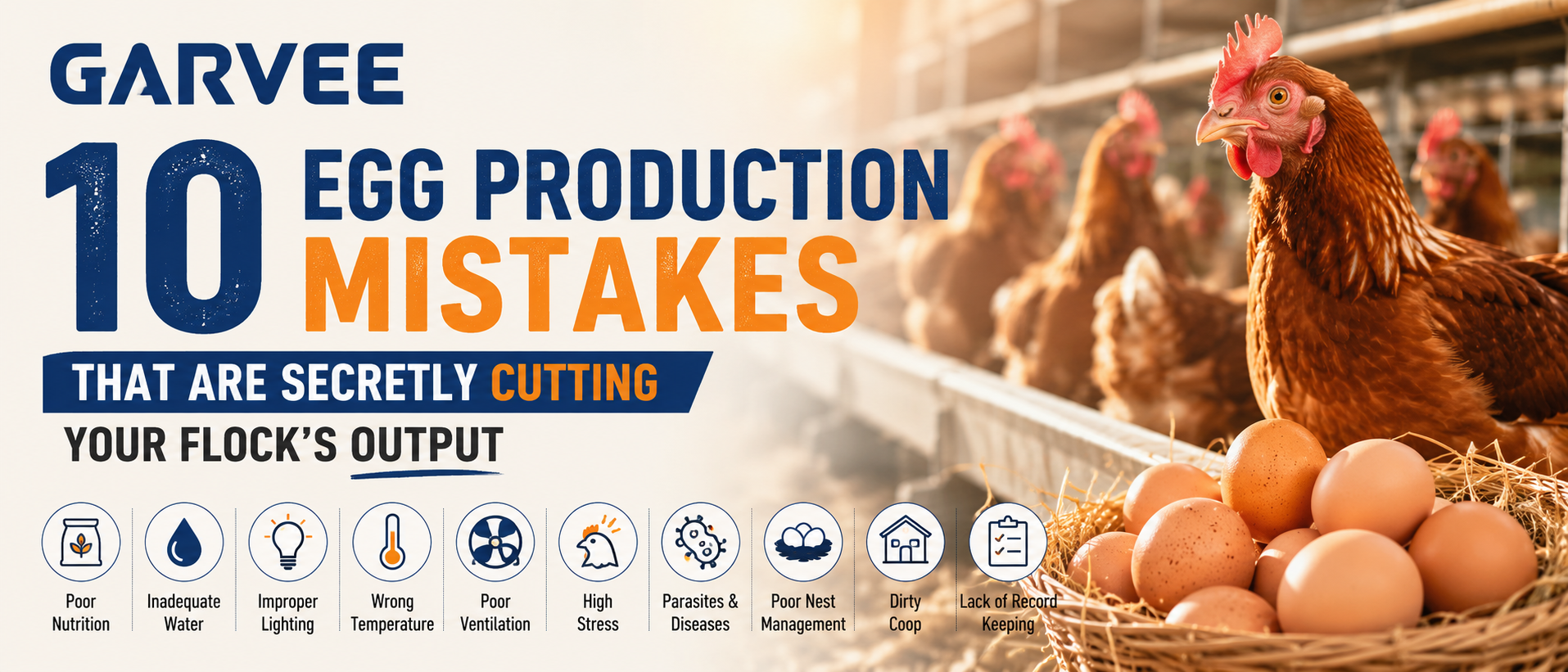
🐔 Fix These MistakesSo you've got your flock set up, your feed routine going, maybe even a few rows of nesting boxes lined up nice and neat. And yet — the eggs just aren't coming in the numbers you expected. It's frustrating, honestly. You're doing everything "right," or so it seems.
Here's the thing though. Most egg production mistakes aren't dramatic. They don't announce themselves. They're quiet, sneaky little issues that chip away at your output week by week until one day you do the math and realize something is seriously off. Whether you're running a backyard setup or a mid-scale poultry farm, these mistakes are more common than people admit.
Let's break them down.
With reliable poultry equipment and farming solutions from Garvee, it's easier to create the right environment for healthier hens and consistent egg production.
1. Ignoring Lighting Hours — The Biggest Egg Production Mistake You're Probably Making
Chickens are photoperiod-sensitive creatures. Translation? Light controls their reproductive cycle. Hens need around 14–16 hours of light per day to maintain consistent laying. Drop below that, and their bodies interpret it as "winter is coming" — and production slows or stops.A lot of small poultry farm owners skip supplemental lighting entirely. Big mistake. Especially during shorter winter days. Investing in a basic timer-controlled lighting system on your egg farming equipment setup isn't expensive. And it pays back fast.
2. Feeding the Wrong Ration — Or the Right One at the Wrong Time
Layer hens have specific nutritional needs. High calcium. Adequate protein — usually 16–18%. A good energy balance. Feed them a grower ration too long, or switch them too late to a layer feed, and you're basically paying for food that does nothing for egg output.Also — and this one trips up a lot of people — scratch grains. Yes, chickens love them. But scratch is essentially junk food. Used as a treat, fine. Used as a supplement to poor-quality feed? You're diluting the nutritional value of the whole diet. Egg farming without tight feed management is egg farming that underperforms.
3. Water Quality Issues Nobody Talks About
People obsess over feed. Waterers? Ehh, rinse it out once a week, whatever. That attitude is costing you eggs.Chickens drink roughly twice as much water by weight as they eat in feed. Dirty waterers, biofilm buildup inside the lines, high mineral content — all of this suppresses intake. And reduced water intake leads directly to reduced egg production. On a proper poultry farm, water line sanitation is a scheduled, non-negotiable task. It should be in yours too.
4. Overcrowding the Coop
This one seems obvious. And yet... it keeps happening.Crowded hens are stressed hens. Stressed hens don't lay well. There's also the pecking order dynamic — lower-ranking birds get pushed away from feeders and waterers, meaning they're nutritionally shortchanged regardless of what you're putting in the trough. The recommended space for laying hens is at least 2–3 square feet per bird indoors, 4–5 in a run.
Scale your chicken poultry farm equipment — feeders, drinkers, perches — to your actual bird count. Not your hoped-for bird count. Your actual one right now.
5. Skipping Proper Ventilation
Ammonia builds up fast in poultry housing. Even if you can barely smell it yourself, the birds are suffering. Chronic respiratory irritation, eye issues, general stress — all of it impacts laying.Good egg farming machinery and housing design accounts for airflow. Cross-ventilation. Ridge vents. In warmer climates, fans. But here's the balance: ventilation without drafts. Cold air blowing directly on hens at night tanks production just as badly as poor air quality does. It's a tricky balance. Most small operations lean too far toward "keep it warm and sealed" — which is usually the wrong call.
6. Neglecting Parasite Management
External parasites like mites and lice? Brutal on laying hens. A mite infestation — especially red poultry mites that hide in cracks during the day and feed at night — can devastate a flock's output without you even knowing what's happening. The birds look fine during the day. But they're being fed on all night.Check your birds weekly. Check under wings, around the vent, the base of feathers. Treat any infestations promptly. On a commercial poultry farm, parasite protocols are built into the calendar. They should be in your rotation too, whatever your scale.
7. Poor Nesting Box Setup
Hens won't lay in a box they don't feel safe in. Too bright? Nope. Too crowded? Nope. No bedding? Not a chance.The general rule is one nesting box per 4–5 hens. Boxes should be darker than the rest of the coop — hens instinctively seek dim, enclosed spaces to lay. Keep them clean. Replace bedding regularly. And here's a small trick: a fake egg or golf ball in the box cues hens that it's a good laying spot.
Cheap, easy fix. Skipping it is one of those egg production mistakes that costs you for months before you even identify it.
8. Letting the Molting Period Derail Your Whole Schedule
Molting is natural. It happens, usually in fall, and egg production drops — or stops entirely — while the birds redirect energy toward feather regrowth. Fine. But how you manage the post-molt recovery matters enormously.Feeding a high-protein ration during molt accelerates feather regrowth. Getting birds back into full production faster is the goal. A lot of small egg farming operations just... wait. And then wonder why production recovery takes three months instead of six weeks.
9. Not Tracking Data
This one is less about chickens and more about you. If you don't know your daily egg count per bird, you can't identify problems early. A slow drift downward over two weeks gets masked unless you're watching the numbers.Even a basic spreadsheet — date, flock size, egg count — gives you enough to spot trends. On any serious poultry farm, egg farming equipment often includes automated counters and sorting machinery that generates this data automatically. At smaller scale, a notebook works. The point is: track it. Review it weekly.
10. Inconsistent Routine — Hens Notice More Than You Think
Chickens are creatures of habit. Feeding at wildly different times, collecting eggs inconsistently, changing their environment suddenly — all of it introduces stress. And stress suppresses laying.This doesn't mean your routine needs to be robotic. But aim for consistency in the big things: lights on/off times, feeding schedule, coop checks. Your hens will settle into rhythm, and that rhythm supports production.
Final Thoughts
Most egg production mistakes come down to one of three things: inadequate environment, inconsistent management, or missing data. None of these are expensive to fix — they mostly require attention and a bit of systems thinking.If you're running even a modest poultry farm, treat it like a farm. Invest in decent egg farming equipment, keep your housing right, stay ahead of health issues, and track what's happening. For reliable poultry farming solutions, explore Garvee range of quality poultry equipment designed to support healthier flocks and better egg production. Your flock can produce at or near its genetic potential — but only if the management conditions support it.
Start with one or two mistakes from this list that you know you're making. Fix those. See what happens. You might be surprised how fast the numbers move.
Explore the world of fashion, beauty, lifestyle, and entertainment with Funandflip – your daily dose of trendy tips, style inspiration, and everything fun, fabulous, and fresh in one place!
🐔 Fix These Mistakes
FAQs
Q1: What is the most common egg production mistake on small poultry farms?
Probably inadequate lighting management. Hens need 14–16 hours of light to maintain consistent laying. Small poultry farm setups frequently skip supplemental lighting, especially in winter, which causes significant seasonal production drops that are entirely preventable.
Q2: Can the wrong egg farming equipment affect output?
Absolutely. Poorly sized or maintained egg farming equipment — especially feeders and waterers — directly impacts how well your flock eats and drinks. Undercapacity feeders lead to competition and uneven nutrition across the flock. Dirty or malfunctioning waterers reduce water intake, which has a surprisingly direct effect on laying rates.
Q3: How quickly can egg production recover once mistakes are corrected?
It depends on the cause. Lighting corrections typically show results within 2–4 weeks. Nutritional fixes can take a similar timeframe as the diet adjusts. Parasite treatment often brings noticeable improvement within 1–2 weeks once infestations are cleared. Molting recovery, however, follows the bird's natural cycle — proper nutrition can shorten it, but you're still looking at 6–10 weeks minimum.