
 Jun 23,2026
 By:
By: Introduction
💪 Fuel UpSo you've seen those massive tubs of powder at the pharmacy or sports store. Maybe a friend mentioned it. Or maybe you scrolled past a fitness reel and thought — okay, what even is whey protein? Is it just for bodybuilders? Do I need to be lifting heavy to use it? Do I even need it at all?
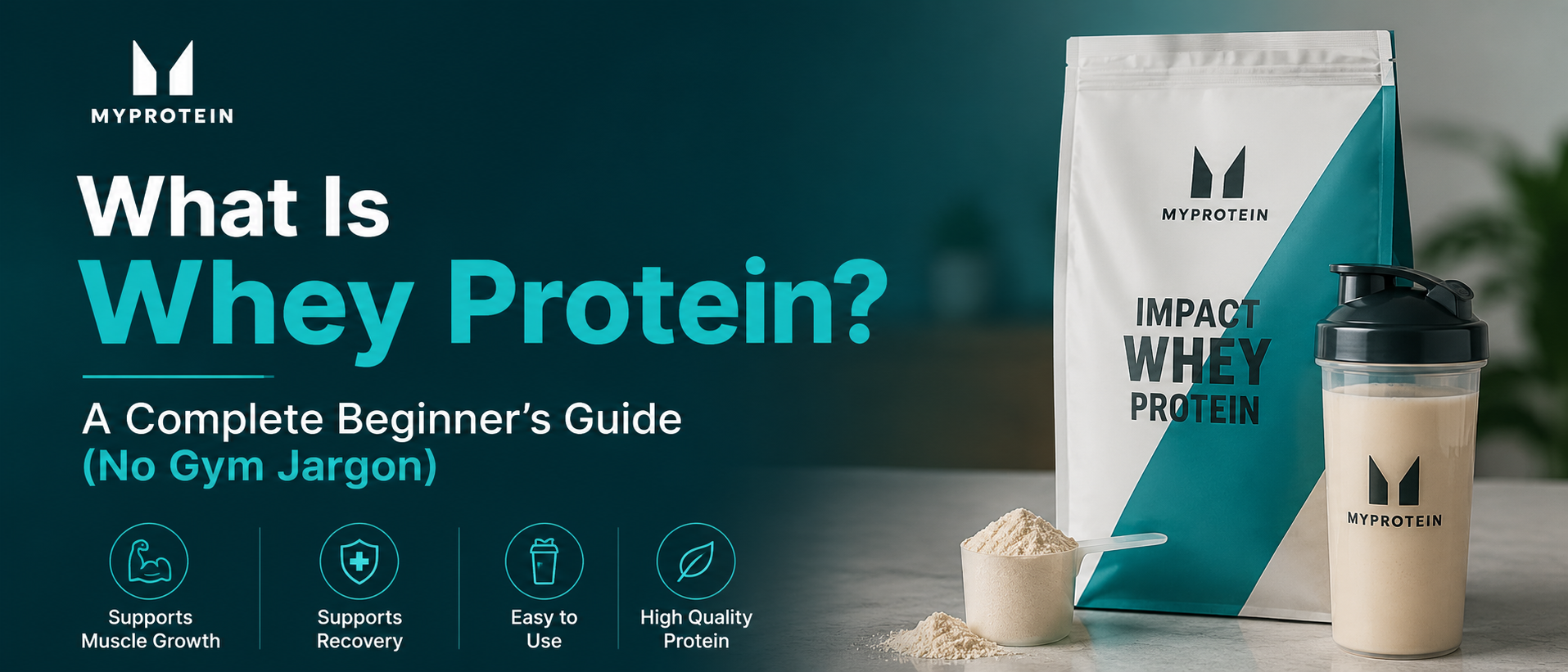
Totally fair questions. And honestly, this guide is going to answer all of them — without making you feel like you're reading a textbook or sitting through a lecture from someone who only talks in reps and macros.If you're ready to try whey protein for yourself, MyProtein offers a wide range of high-quality protein powders in different flavors and formulas to suit beginners, fitness enthusiasts, and athletes alike.
Let's just... start from the beginning.
What Is Whey Protein, Exactly?
Whey protein is a natural protein derived from milk. When cheese is made, the liquid that separates from the curds — that thin, watery stuff — is whey. For centuries, cheesemakers just tossed it away. Turns out, it's actually packed with protein. Who knew?That liquid gets processed, filtered, and dried into the powdered form you see on shelves today.
Milk has two main proteins: casein (about 80%) and whey (about 20%). Whey digests quickly. Casein takes longer. That speed difference actually matters — but we'll get to that.
Here's the thing that makes whey stand out: it's a complete protein source. That means it contains all nine essential amino acids your body can't produce on its own. Your muscles, immune system, and basically every cell in your body need these amino acids to function properly. Not all protein sources — especially plant-based ones — can claim that.
The Three Types of Whey Protein (And Which One Actually Matters for Beginners)
Walk into any supplement store and you'll find three main forms. It's not that complicated, but it's worth knowing the difference.Whey Protein Concentrate (WPC) This is the most common, most affordable form. It contains somewhere between 70–80% protein per serving, with small amounts of fat and lactose remaining. Great taste. Budget-friendly. Most beginners start here — and honestly, there's nothing wrong with staying here.
Whey Protein Isolate (WPI) More filtered than concentrate. Usually 90%+ protein per serving with very little fat or lactose. Good option if you're lactose-sensitive or just want a leaner supplement. Slightly pricier.
Whey Protein Hydrolysate (WPH) Pre-digested. Absorbed faster. Often used in medical nutrition and infant formulas. Expensive. For most beginners, this is overkill. Unless you've got a specific reason — skip it.
Start with concentrating. See how your body responds. That's the honest advice.
Why Is Whey Protein So Popular? (It's Not Just the Gym Crowd)
Okay so here's where people get confused. They assume whey protein is only for people who work out intensely — like, big-arms-at-the-gym type people. But that's not really true.Whey protein for beginners is popular for a very simple reason: most people don't get enough protein from food alone. And protein is kind of... essential. For everyone. Not just athletes.
Here's what adequate protein actually does:
- Muscle repair and growth — after any physical activity, your muscles need amino acids to rebuild. This includes walking, yoga, or lifting groceries.
- Satiety — protein keeps you full longer than carbs or fat. This matters a lot if you're trying to manage your weight.
- Immune support — antibodies are proteins. Your immune system literally depends on adequate protein intake.
- Metabolism support — protein has a higher thermic effect than other macros. Meaning your body burns more calories just digesting it.
How Much Whey Protein Do You Actually Need?
This is where people overthink it. Like, a lot.The general recommendation for most adults is around 0.8–1g of protein per kilogram of body weight per day. If you're active — even moderately — bump that to 1.2–1.6g per kg. Athletes or people trying to build muscle might go higher.
A standard scoop of whey protein powder gives you roughly 20–25g of protein. One scoop a day, mixed into water or milk, can meaningfully bridge the gap if your diet is falling short.
But here's the honest part — whey protein is a supplement, not a replacement. It works best when your overall diet is already reasonably solid. If you're surviving on instant noodles and skipping meals... adding a protein shake won't fix that.
Whey Protein for Beginners: When and How to Take It
Timing matters — sort of. The old "you MUST drink it within 30 minutes of working out or it's useless" advice has been largely debunked. Total daily protein intake matters far more than exact timing.That said, taking whey protein after exercise is still a solid habit. Your muscles are primed to absorb nutrients post-workout. Morning is also good if you tend to skip breakfast or eat a low-protein one.
Simple ways to use it:
- Mix one scoop with water or milk. Done.
- Blend with a banana, oats, and some peanut butter for a proper meal replacement smoothie.
- Stir into oatmeal or yogurt if you don't like drinking it.
- Mix into pancake batter. Seriously — works surprisingly well.
Is Whey Protein Safe? Who Should Be Careful?
For most healthy adults — yes, it's safe. It's food-derived and has been studied extensively. Years and years of research back its safety profile.But there are some nuances.
- If you have a dairy allergy (not just lactose intolerance — actual milk protein allergy), whey is not for you. Full stop.
- If you have kidney disease, high protein intake — from any source — may be problematic. Talk to your doctor before supplementing.
- If you're pregnant or breastfeeding, same thing — check with your healthcare provider. Not because whey is inherently dangerous, but because individual circumstances vary.
Whey Protein vs. Other Protein Sources: Is It Worth It?
Fair question. You don't need whey protein. Plenty of people hit their protein goals through whole foods — eggs, chicken, fish, lentils, tofu, dairy. All valid.But whey has a few specific advantages:
- Convenience. A scoop of powder takes 60 seconds. Cooking a chicken breast takes 20 minutes minimum.
- Bioavailability. Whey is one of the most easily absorbed proteins available. It has a high PDCAAS (Protein Digestibility Corrected Amino Acid Score) — meaning your body actually uses most of what you consume.
- Complete amino acid profile. As a complete protein source, whey contains leucine, isoleucine, and valine — the branched-chain amino acids (BCAAs) most linked to muscle protein synthesis.
- Cost per gram of protein. When you factor in convenience and protein density, quality whey protein is often cheaper per gram of protein than meat.
Final Thoughts: Should You Try Whey Protein?
If you're someone who struggles to hit daily protein goals, eats a fairly active lifestyle — even casually — or just wants a convenient, effective, and affordable way to support your overall health... Whey protein is worth trying.It's not a steroid. It's not a "gym thing." It's literally just a food-derived supplement that makes hitting your protein target easier. That's it.
Start simple — one scoop a day, mixed into whatever you enjoy. Track how you feel after a few weeks. Your energy, recovery, and even hunger levels might surprise you.
If you're looking for a reliable option, MyProtein offers a wide range of high-quality whey protein powders in different flavors and formulations, making it easy to find one that fits your goals and routine.
And if someone at the gym starts throwing around terms like "anabolic window" and "BCAA stacking protocols"? Nod politely and walk away. You've got what you need right here.
Explore the world of fashion, beauty, lifestyle, and entertainment with Funandflip – your daily dose of trendy tips, style inspiration, and everything fun, fabulous, and fresh in one place!
💪 Fuel Up
Frequently Asked Questions
Q1: Can beginners use whey protein without working out?
Yes. Whey protein for beginners isn't limited to gym-goers. If you're simply not getting enough protein from your regular diet — which is very common — a daily protein shake can support muscle maintenance, energy, immune health, and satiety regardless of workout intensity. That said, combining adequate protein with some form of physical activity will give you better results overall.
Q2: Will whey protein make me "bulky" or cause weight gain?
Not automatically. Whey protein alone doesn't cause weight gain — excess calories do. If you're adding a shake on top of an already high-calorie diet without increased activity, that could contribute to weight gain. But if you're using whey to replace lower-quality snacks or hit a higher protein target within your caloric needs, it's far more likely to support weight management than hinder it.
Q3: Is whey protein a complete protein source?
Yes — this is one of its biggest advantages. Whey is a complete protein source, meaning it contains all nine essential amino acids your body cannot synthesize on its own. This is especially important for people who don't eat meat or consume limited animal products. Not all protein supplements share this quality, so it's worth confirming the amino acid profile of any protein powder you choose.