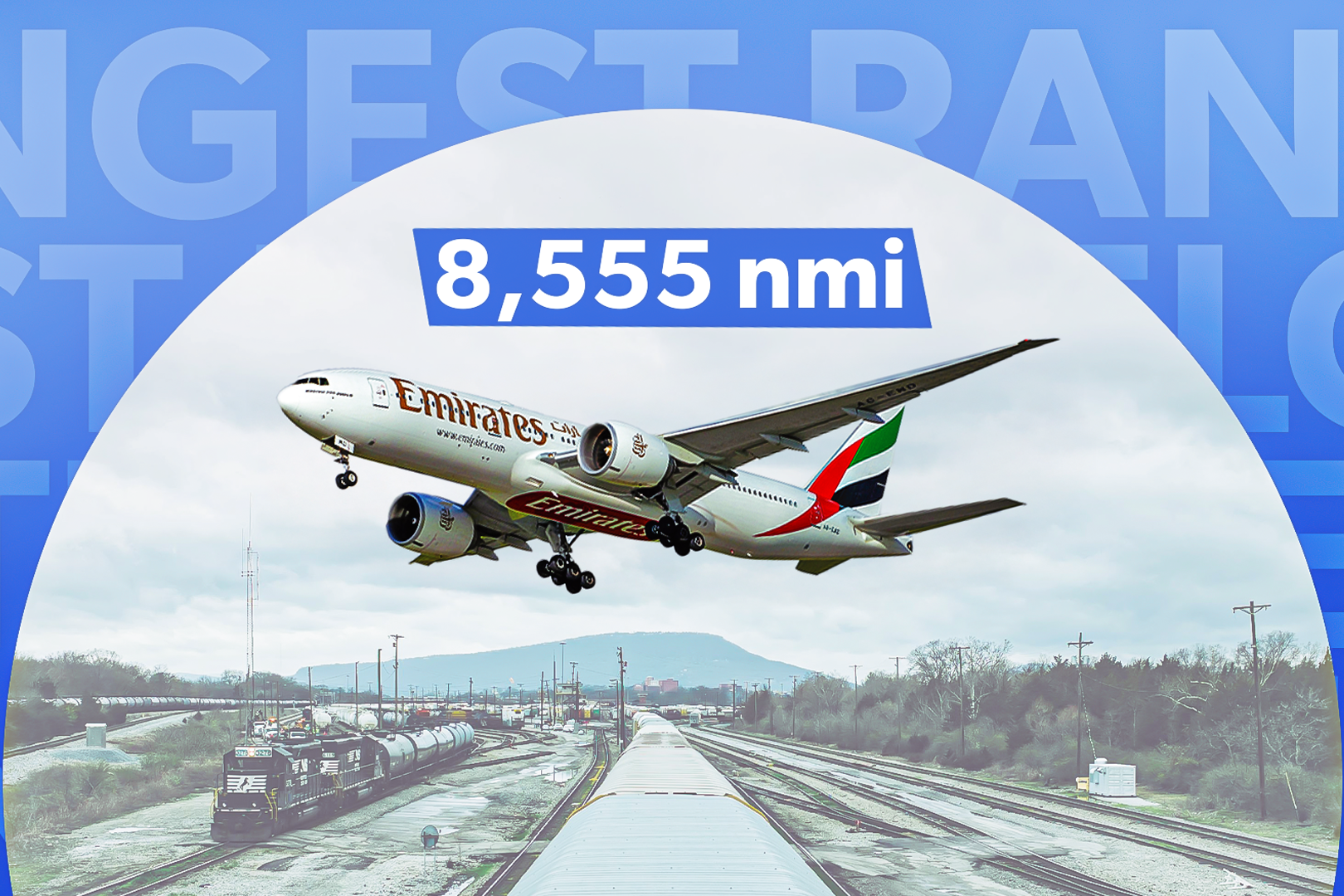


When the Boeing 777-200LR entered commercial service in February 2006 with Pakistan International Airlines, it was hailed as the Worldliner, thanks to its ability to connect almost any two airports in the world. With an impressive range of up to 8,555 NM, the 777-200L was indeed a record-breaking aircraft. At the time, Airbus had already developed the long-range A340-500, but with just two engines as opposed to the A340's four engines, the Boeing 777-200LR was considered a more fuel-efficient option for airlines looking to connect far-flung destinations.
With a full passenger payload of up to 317 passengers, the 777-200LR is capable of operating the following routes non-stop: London - Perth Singapore - Cape Town Dubai - Los Angeles Beijing - Bogotá. However, only 61 Boeing 777-200LRs were ever ordered and built. Other modern aircraft with a similar range, such as the Airbus A350 and the Boeing 787, are much more fuel-efficient, making the 777-200LR somewhat redundant in its category.

Built for very long-haul routes, these are the 777-200LR's shortest services in September. How does the Boeing 777-200LR achieve such a long range? The Boeing 777-200LR's impressive range can be attributed to several key features in its design. The aircraft is equipped with larger fuel tanks and is powered by two General Electric GE90-115B engines, each providing up to 115,000 lbs of thrust.
The GE90-115B engine is the most powerful aircraft engine ever built, and is also renowned for its relia.