

There are many reasons why some runways are built longer than others, ranging from terrain type, altitude, weather conditions and other factors. When it comes to commercial runways, they typically measure anywhere from 1,800 meters (4,921 feet) to 3,500 meters (11,483 feet) for large international airports, but there are extremes that go either side of those figures. For example, Denver International Airport (DEN) has a massive 4,877-meter (16,000 feet) runway due to its high elevation, while London City Airport (LCY) has a runway measuring 1,508 meters (4,948 feet), which used to be just 1,080 meters (3,543 feet).
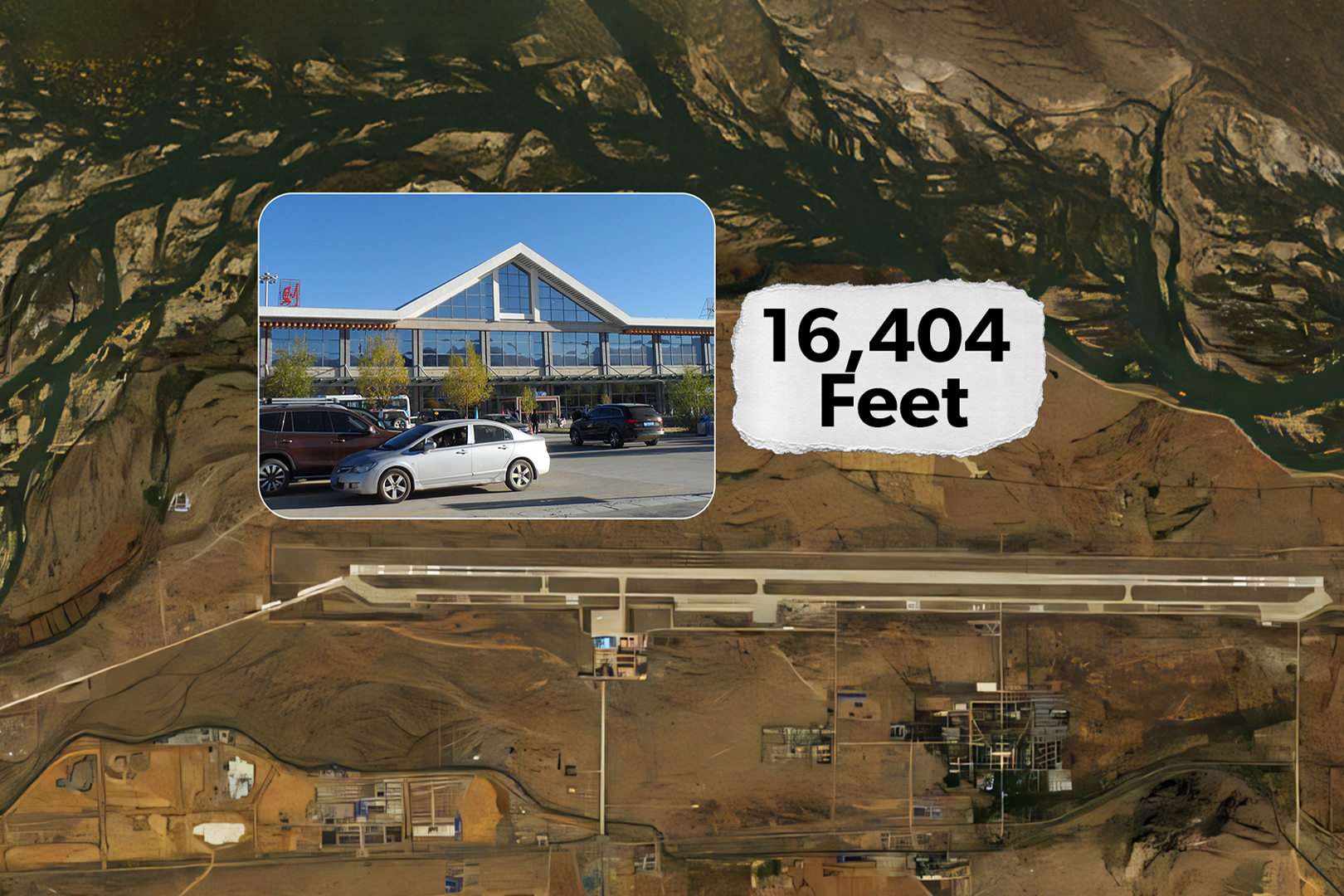
On the subject of ultra-long runways, there are currently two airports that jointly hold the title of having the longest runway in the world - Ulyanovsk Vostochny Airport (ULY) in Russia and Shigatse Peace Airport in China, which both have runways extending 5,000 meters (16,400 feet) long. From beaches to mountains, each airport demonstrates a remarkable feat of engineering required to connect the world through air travel. So what is the history behind these two airports, and why do they have such huge runways? Shigatse Peace Airport (RKZ) 5,000-meter runway at an altitude of 3,782 meters Situated near the city of Shigatse (or Rikaze) in Tibet, Shigatse Peace Airport is a dual-use civil and military airport with the joint-longest runway in the world.

At an elevation of 3,782 meters (12,408 feet), it is also one of the world's highest airports and handles a small nu.