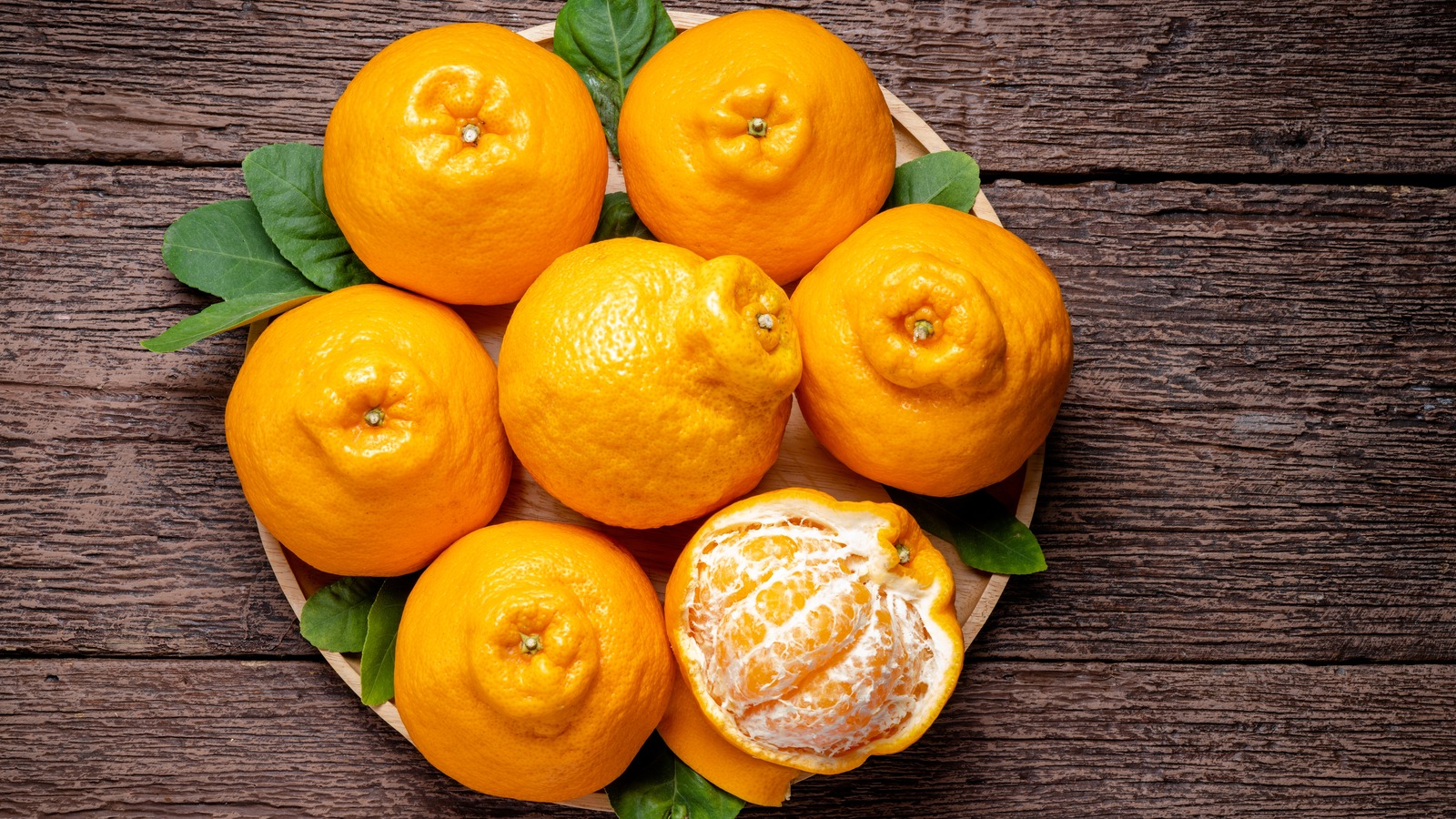


Sumo oranges are hard to miss. They're the orange variety you see at the store with the puckered topknot, and they're named "sumo" since the bump on top resembles a sumo wrestler's distinct hairstyle. The fact that they're so visually distinguishable is one thing that has set them apart from similar fruits, but they have the added benefit of also being delicious.
Sumos are actually a seedless hybrid between a mandarin, satsuma, and navel orange, and they're known for being distinctly sweet. Coupled with their sweetness, the fact that they're large (like a navel orange) and easy to peel (a benefit of being part mandarin and satsuma) have made sumo oranges a popular and convenient snacking fruit to reach for when they're in season. (They're typically available between January and April in the U.

S.) Suffice it to say, these are some pretty unique oranges, and not just because they look a little funny. Sumo citrus is relatively new to the American market It's not often you consider an entire type of fruit as "new" (like ), but Sumo citrus fruits have only been available in the U.
S. market since 2011. In Japan this type of orange is classified as a "shiranui" fruit, but is also marketed under the trade name "Dekopon.
" As the years have gone by, the fruit has taken on different names depending on the purveyor (like "Sumo" and "Big Honey," for example), but they're still the same shiranui fruit. The obsession with these things isn't purely thanks to their sweetness, however. They're.