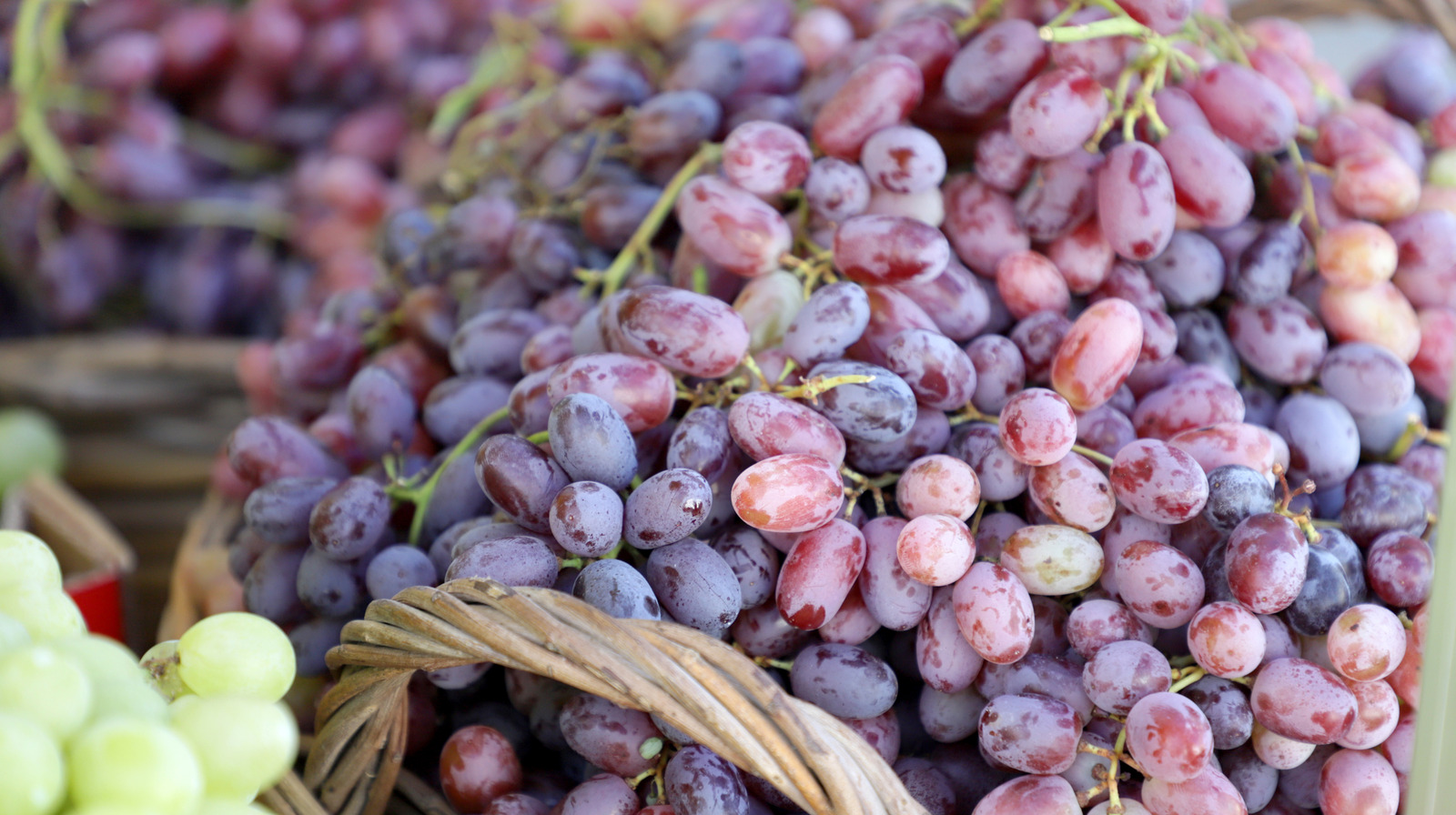


There's nothing quite as satisfying as the refreshingly crisp, sweet, yet tart bite of a perfectly ripe grape. However, people don't talk about sour grapes for no reason — sometimes buying, feels like a game of Russian roulette. Luckily, we're here to alleviate at least one of your grape-related concerns.
That suspicious white powdery stuff on your grapes is most likely completely normal and safe to eat. In fact, it's probably a positive thing. If you notice a thin white or bluish film on your grapes, odds are it's a natural plant residue called a bloom.

This waxy substance often appears on the surface of plants such as cabbage, plums, apples, and grapes, and you can rest assured that it's totally safe to consume. The bloom is produced by the grapes themselves, and it serves an important purpose — it protects your precious fruit from drying out and decaying. The bloom on your grapes is mainly composed of a compound called oleanolic acid, which may have antibiotic and anti-inflammatory properties.
The difference between mold and bloom So, bloom is great. It protects grapes from mold and keeps them nice and juicy, and it could even be quite healthy. But we'd all rather avoid the disgust and panic of , so how do you know that white stuff is blooming? One easy way to tell the difference is that bloom will cover all of the grapes in a consistent layer, while mold tends to be more spotty.
Additionally, bloom is a powdery or waxy white or bluish substance, while moldy grapes usu.