

Most vehicles use a piston engine similar to the one-cylinder, four-stroke motor in the first car ever made, Karl Benz's Patent Motorwagen . Lately, a more fuel-efficient and emissions-friendly engine design, the opposed-piston engine , has been gaining ground with commercial fleets. However, one engine format that never quite took hold in the auto industry is the Wankel rotary engine .
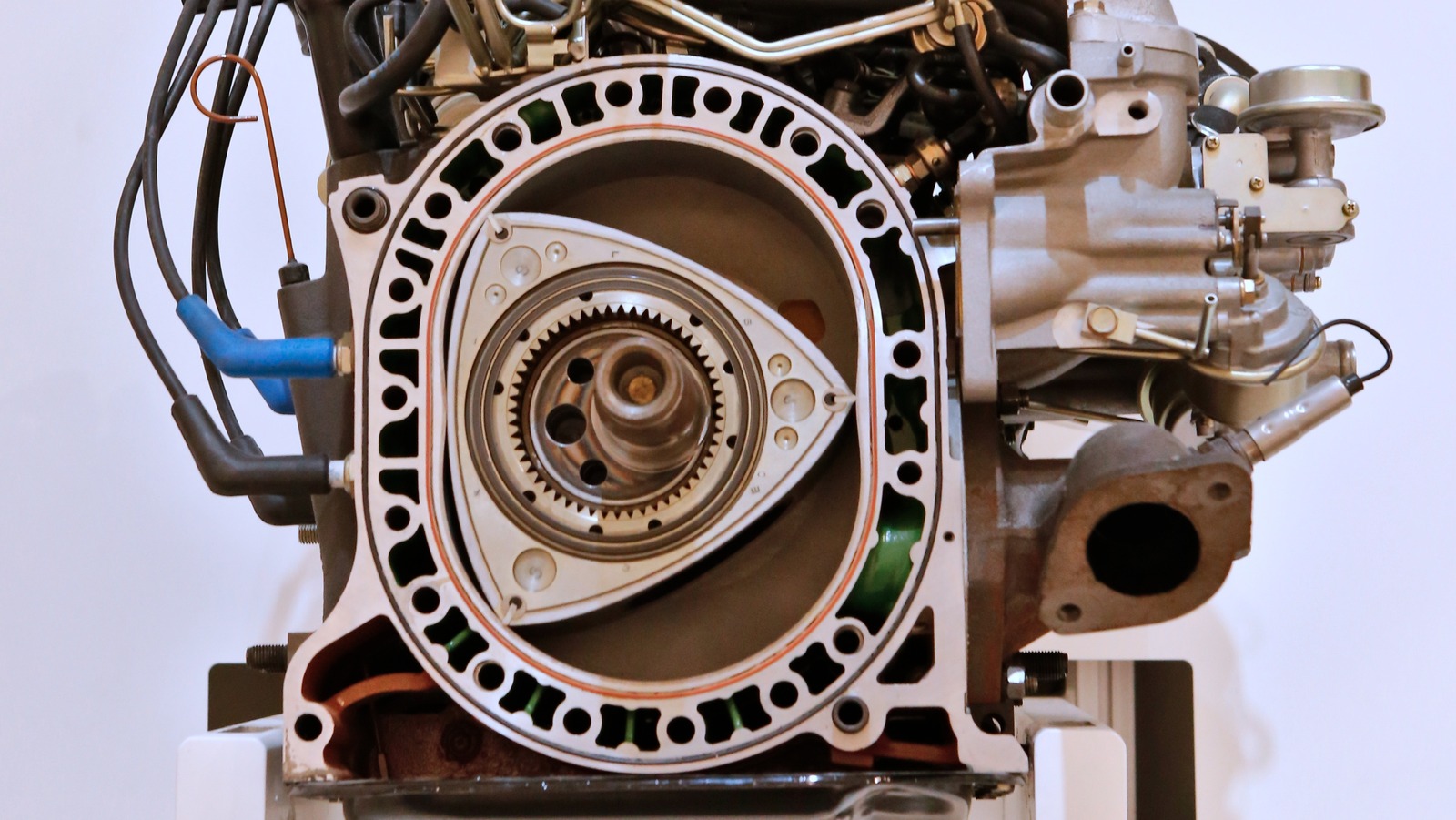
This engine uses a triangular piston that meshes directly with the crankshaft and rotates within an oval-shaped cylinder. It was invented in the 1920s by self-taught German engineer Felix Wankel, who completed his first prototype in 1954 while working for the NSU Motorenwerk Auto Group. In the early '60s, Mazda bought the technology from NSU, and in the following decades, it produced more viable rotary-powered vehicles than any other automaker, including the RX-7 sports car and REPU (Rotary Engine Pick Up) truck.

Although Mazda carried the banner for rotary engines through the latter part of the 20th Century, its cars were far from the only notable ones to use Wankel's design. Still, it would be impossible to catalog the best cars to use rotary engines without including mostly Mazdas. Wankel's company, NSU, was unsurprisingly the first to use the rotary engine in a production car.
Wankel's first single-rotor production engine weighed only 125 kilograms (about 276 pounds) and was small enough to fit under the floor of the 1964 NSU/Wankel Spider roadster. NSU only made 2,375 Spiders through 1967.