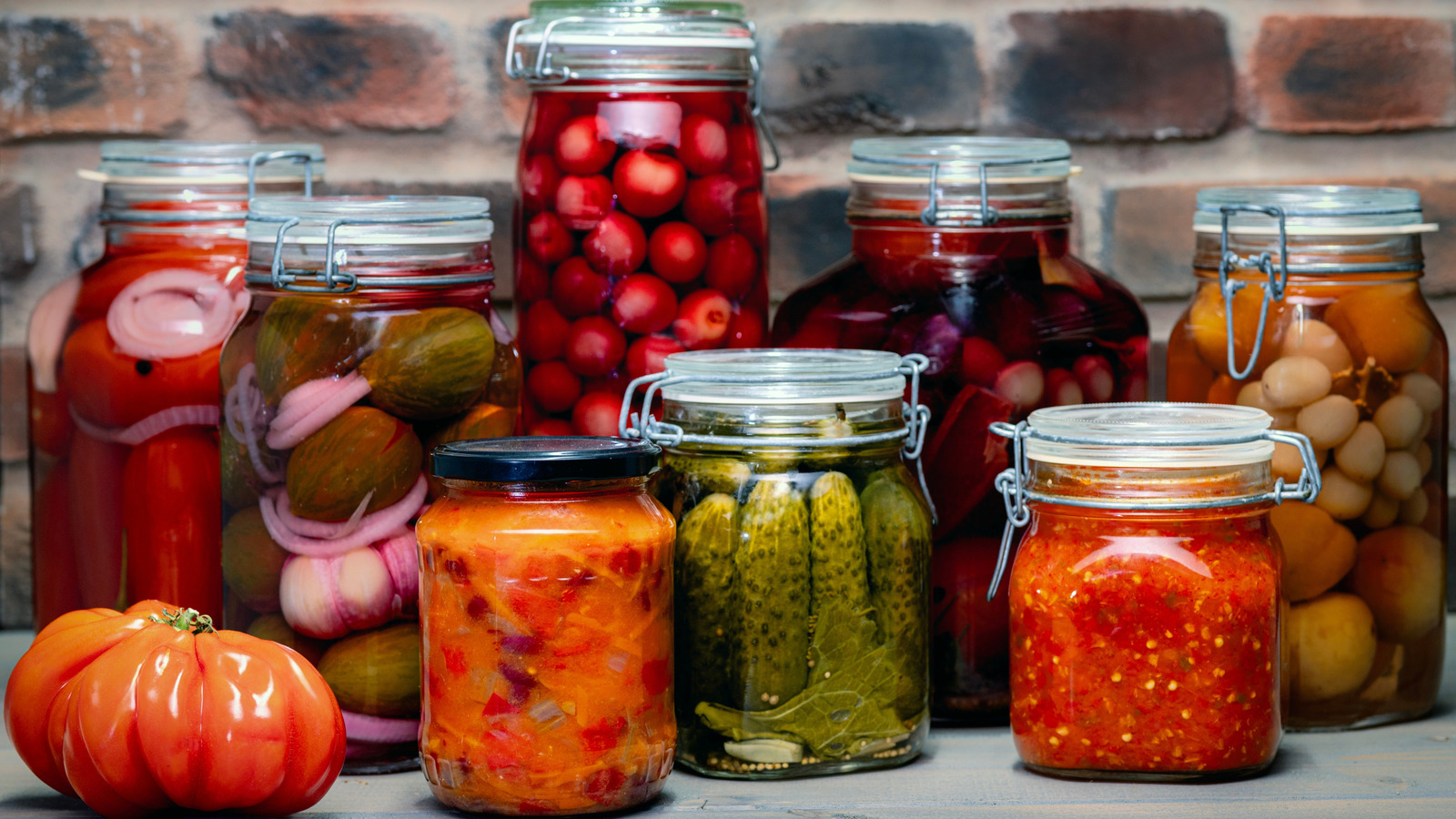


When you're trying to elevate your home pickling game , you might realize that regular white vinegar isn't always going to cut it. Enter, malt vinegar, a richer-tasting acidic base made from malting barley. This leads to a more complex flavor than the sharp white vinegar most often used for pickling.
However, malt vinegar's stronger flavor also means you have to be careful when using it. Vegetables pickled in white vinegar will generally retain their flavor, with the acid simply adding a tinge of pungency. Malt vinegar lends potent flavor to whatever it's pickling, therefore you have to choose your vegetables, and flavoring agents, more carefully.

Malt vinegar also lends a light brown color to the vegetables. If you're using malt vinegar for the first time, consider diluting it with white vinegar in a 1:4 ratio. This allows you to enjoy the more complex flavor without overpowering the other ingredients.
You're most likely making quick pickles — the kind made in glass jars and stored in the fridge. However, malt vinegar can be used for fermented or canned pickles, as well. To ensure that your creation has a healthy shelf life, keep the acid content of the pickling liquid is over 5%, which will prevent the formation of bacteria.
How to best use malt vinegar in pickling White vinegar is a simple solution of acetic acid diluted with water and adds a sharp, bright pungency to pickled ingredients. Malt vinegar has an even more potent flavor with nutty, tangy, and lightly sweet no.