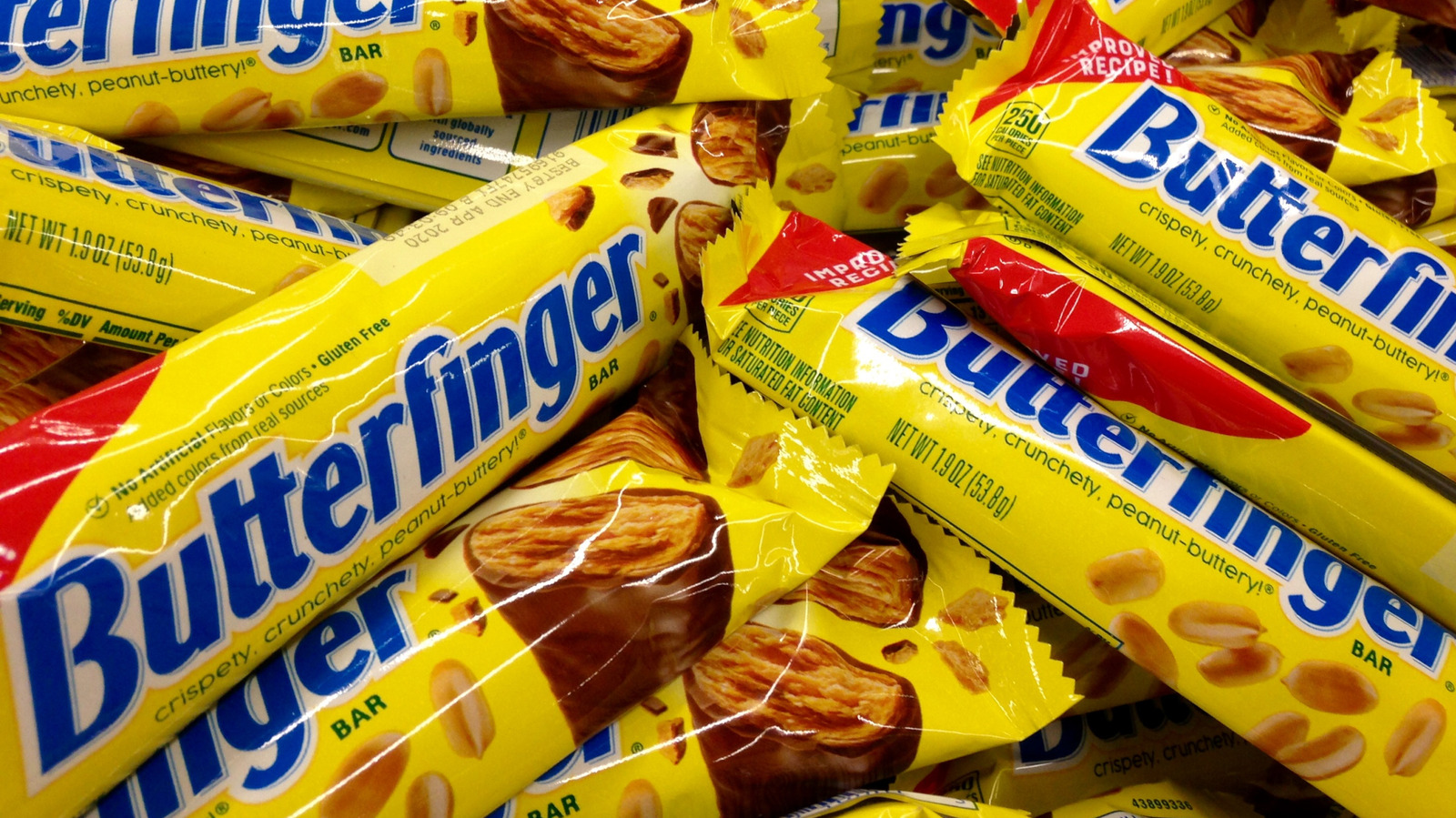


Butterfingers have been around since the 1920s, commanding both loyal followers and naysayers that claim . Wherever you stand on the matter, there's something that not even its fiercest fans can deny: Butterfingers aren't chocolate. This isn't a strongly worded opinion meant to diminish the product's legitimacy.
It's the legal truth. You see, have varying standards that are set by the U.S.

Food and Drug Administration. For instance dark chocolate has to have at least 50% chocolate liquor (a combination of cocoa solids and cocoa butter) and sugar. Milk chocolate must contain at least 10% chocolate liquor, sugar, and milk.
White chocolate is controversial because its lack of cocoa solids and minimum of 20% cocoa butter means . So how do Butterfingers compare to these official standards? They have less than 2% cocoa, and no chocolate liquor. Even white chocolate has a stronger claim to the second part of its name than this popular yet deceptive product.
In fact, the main ingredient in Butterfingers is corn syrup, followed by sugar, peanuts, vegetable oil, peanut flour, nonfat milk, cocoa, milk, salt, soy lecithin (a fatty substance), natural flavor, and annatto color (which is yellow-orange). And before 2018, the product had a new recipe but even less cacao, but continued to populate grocery store shelves next to real chocolate products for decades. Given this, Butterfingers are most accurately described as candy bars.
Butterfinger's somewhat misleading marketing If Butterfinger.