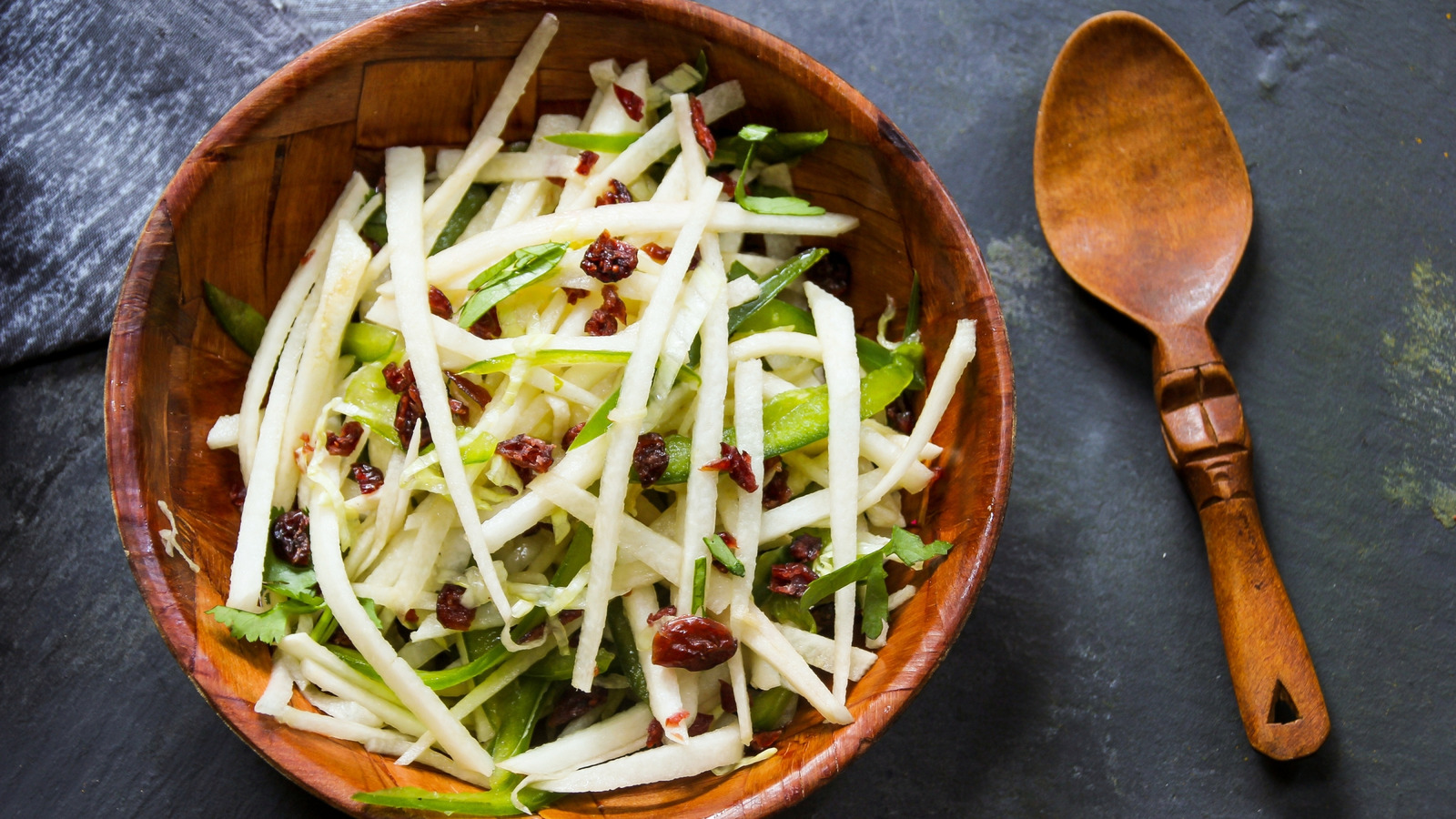


In the world of crunchy produce, daikon radishes and jícama reign supreme. Both vegetables are high in nutrients, and both can be prepared fried or pickled or used raw to make a delicious salad or slaw. It's true that jícama can be used as a substitute for daikon in recipes that need a crunchy bite — but these veggies are not actually related.
Despite the similarities in texture and uses, daikon radishes and jícama are very different. First, they come from different continents. Although daikon radishes and jícama are both grown underground, one has edible skin, while the other's peel is toxic.

While both vegetables are crunchy and hydrating, their flavors — and appearance — are distinctly unalike. So, what's the difference between these two very unique vegetables? The entirely edible daikon radish Daikon, also known as Japanese radish, is a root vegetable that can be oblong, spherical or or cylindrical in shape. It commonly has white flesh but can also be purple, red, or green.
It is native to East Asia and often used in South Asian cooking. Despite being related to the spicy red radishes you're probably familiar with, daikon radishes typically have a sweet, milder flavor. Daikon radishes are low in calories and carbohydrates but high in health benefits.
They are a great source of folate, potassium and vitamin C. Daikon is also a high in fiber. Peeling daikon radishes is optional.
A good scrubbing is all that needs to be done before you eat daikon. If you're luc.