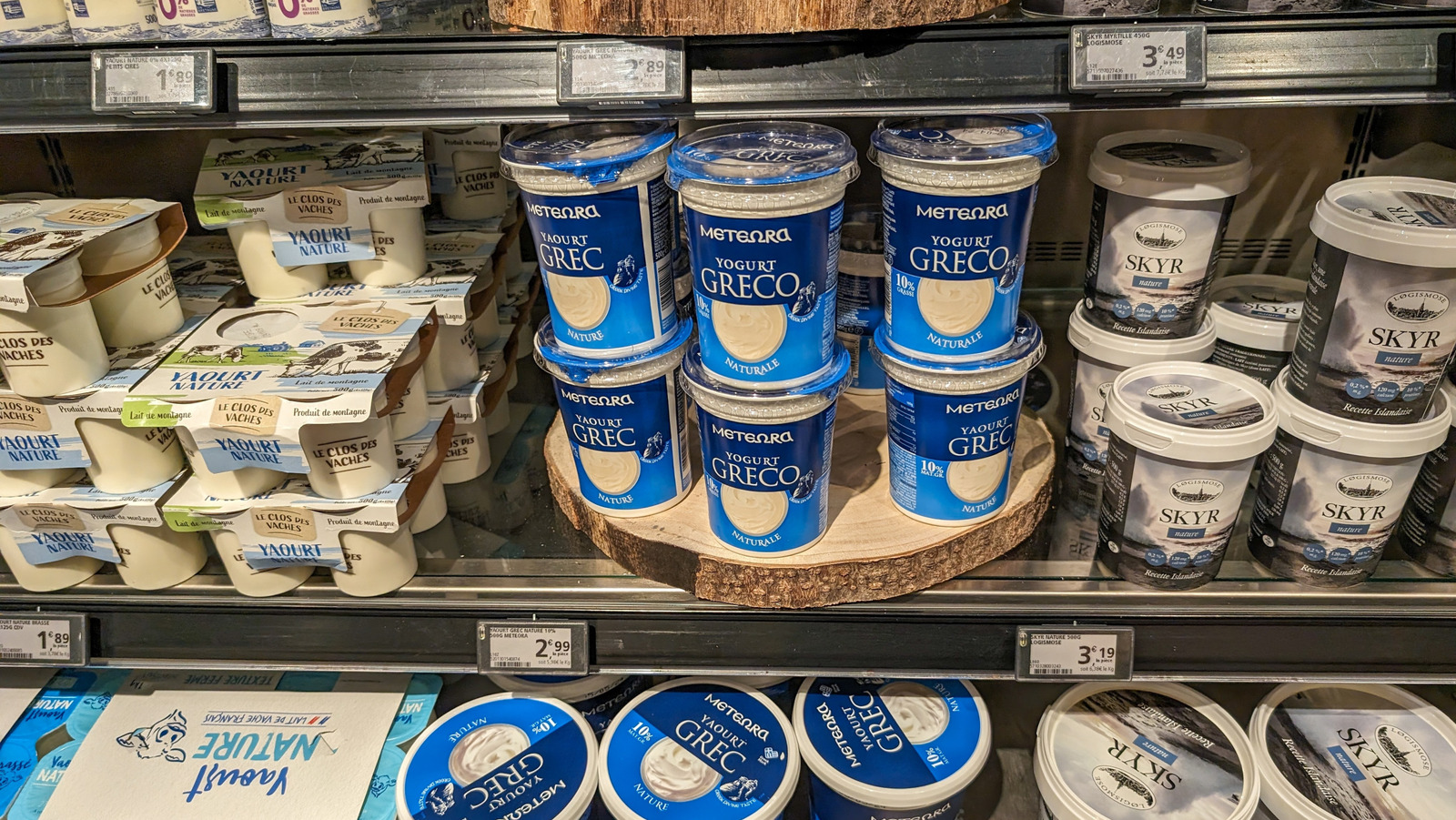


Choosing a yogurt has become as overwhelming as wandering down the cereal aisle with a six-year-old. The choices are endless, and we don't just mean the choice of flavors. The number of yogurt varieties that are now available has grown tremendously, and seem to come from all over the globe.
At its most basic, yogurt is a thick, creamy dairy product that is made by fermenting milk with specific strains of bacteria. The milk is first heated so curds don't form, and then the live cultures are added, which ultimately produce lactic acid, giving yogurt its signature tang. But how it's treated from here differentiates the many regional varieties, such as Greek yogurt and skyr.

I've been eating Greek-style yogurt for a very long time. I love the thick texture and the pleasant tanginess. The first time I saw skyr yogurt in the grocery store, I didn't think much of it.
I only tried it last year, but I was surprised how much I loved it. It was thick, like Greek yogurt, but with a milder, less sour flavor. The fact that it was flavored with lingonberries probably added to the appeal.
Now, for the first time, when I go grocery shopping and want yogurt, I have a decision to make. Although the two yogurts share some similar traits, there is one element about skyr that sets it apart from Greek yogurt as well as (French, Bulgarian, Australian, etc.): Skyr is technically a cheese.
What is Greek yogurt? The Greek yogurts found in the store don't necessarily come from the ancient Mediterranean .