
ONLY AVAILABLE IN PAID PLANS.
Back to Beauty Page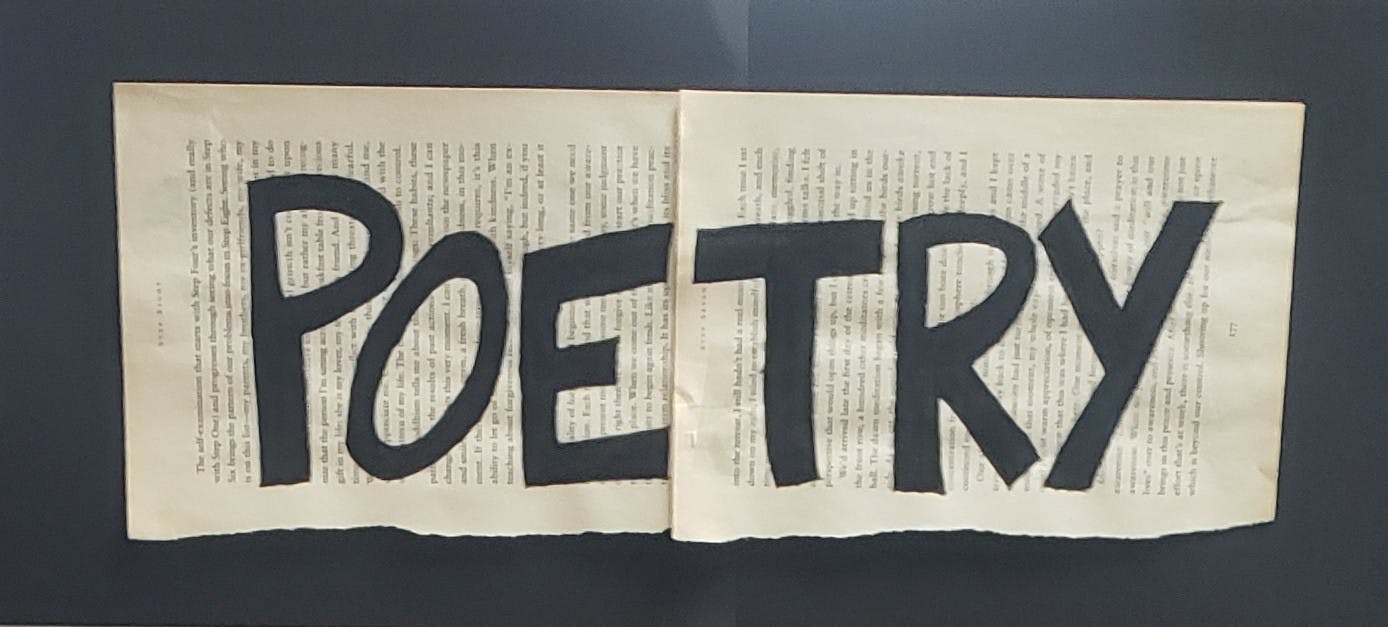


In honor of National Poetry Month, the Arts & Entertainment section of The News-Letter presents our specially curated picks of poetry from various contributing writers, staff writers and editors. Some of these are our favorite (or one of our favorites) poems; others are the most memorable poems recently occupying our minds. We hope you find a new poem (and perhaps poet) to read! Estelle Chen: "Cassette County" by David Berman Real fans of the American folk-rock band Silver Jews know that the lead singer David Berman published a poetry collection in 2003 titled Actual Air . "In 1984, I was hospitalized for approaching perfection" sings Berman in the beginning of the band's most famous song, " Random Rules ," and the same wry, arrogant, slightly absurd yet touching informality follows him into his poems. Of the many great poems in Actual Air , my favorite is " Cassette County ," a free-verse ode to being sarcastically genuine and finding the ironic-poetic details of everyday life. Berman's greatest skill, to me, lies precisely in twisting the minutia of American habit into witty pearls. He asks, "why do mothers carry big scratched-up sunglasses / in their purses?" He waves, "Hello to the era of going to the store to buy more ice / because we are running out." The poem rambles freely, maybe too freely, abruptly shifting from witticism to witticism. So many observations distill each into their own line, forming dozens of little arrows shooting more or less at the same target: this general mood about the American mundane. We're all experiencing pretty similar mundanities of life; I hope this poem speaks to you about them as much as it speaks to me. Saffron Hallet: "Considering the Snail" by Thom Gunn Very few poems ponder the question: "What is a snail's fury?" Perhaps more should. It is in Thom Gunn's " Considering the Snail " (1961) that the audience is shrunk down to the size of the gastropod to witness the might and existence of this seemingly benign creature. We observe the snail on its eternal journey, an alien-like creature whose inner world is unknown to us. We can only measure its progress by its trail and wonder. Does it know where it is headed? Will it ever reach this place? Does it care? This poem brings into question our own passions and plans, as well as our place in the grand scheme of life. The lines "the bright path he makes where rain / has darkened the earth's dark" are not only a vivid representation of a rain-soaked scene but also a symbol of the strength in perseverance and the moments of joy and success that sometimes fall to the back of our minds. Yet, they remain in our history. Through this consideration of such a far removed lifeform, Gunn implores us to view the remarkability of nature and reflect on ourselves. Kevin He: "The Love Song of J. Alfred Prufrock" by T.S. Eliot "Let us go then, you and I," Go where? It is this unwillingness to go, that paralyzing decision, that makes us all Prufrock. Far from Eliot's most challenging poem, " The Love Song of J. Alfred Prufrock " wallows in its simplicity, its shame: "No! I am not Prince Hamlet, nor was meant to be." Polonius will suffice. And how could I ever be him? Life is just a bunch of choices, anyways. Shall I part my hair behind? Do I dare to eat a peach? Stifling anxiety, I declare. We pity the Fool, but what happens when we are the Fool? You know, we are almost, at times, the Fool. At face value, we are regaled with a tale of insecurity and of complete self-doubt. In many ways, "Prufrock" is the anti-epic. Maybe, that's why Eliot opens with a quote from Dante's Inferno . Like Guido, Prufrock's many shortcomings are never heard by the world. Like Lazarus, no one would listen. Who would ever listen to the existentialist musings of this pathetic man? Only us. Every line is meticulous; the poem a self-replenishing well of angst. Nothing speaks to me more than finding time for a hundred indecisions, and for a hundred visions and revisions too. River Phan: "Paradoxes and Oxymorons" by John Ashbery John Ashbery is the only poet who can get me to like two of the most trite poetic conventions combined together: free-verse and the use of the word "poem." In " Paradoxes and Oxymorons ," Ashbery's opening line tells you exactly what he seemingly sets out to do. He says, "This poem is concerned with language on a very plain level." However, consistent with Ashbery's disjunctive style, the poem moves from useful instructiveness to unpredictability. Suddenly, the reader is addressed: "Look at it talking to you. You look out a window / Or pretend to fidget." The poem becoming an "it" adds distance, which continues: "You have it but you don't have it. / You miss it, it misses you. You miss each other." Expectations are set-up and subverted: "And before you know / It gets lost in the steam and chatter of typewriters." The enjambment between "know / It" severs the common phrase, but "the chatter of typewriters" grounds itself. This push-and-pull provokes the reader's agency and ability to interpret; how close can you get? Ashbery's manipulation of intimacy and distance makes the poem's final transformation puzzling but comforting: "The poem is you." Despite its conclusion, much of the poem remains a mystery. This earlier thought, from the speaker, fascinates me: "I think you exist only / To tease me into doing it." Is "you" still the reader? Is "it" still the poem? Are they switched? Does it matter? Poetry teases but we tease too. Only paradoxes on some, possibly plain, level could clarify it all. Myra Saeed: "Wait for Her" by Mahmoud Darwish Darwish's poetry has always spoken my heart's language, mimicking even its unique dialect. " Wait for Her " tenderly follows a speaker advising the reader to, quite literally, wait for his lover. Whether she is arriving late or early, or if she's sitting in a garden, letting the birds rest in her hair, the reader's love must push him to wait for her. I've always cherished the gentle, divine love that overrides anything worldly; even if an individual inconveniences, irritates and jabs at you, you can't help but remain patient, over and over again. Darwish's depiction of true love overpowering immediate gratifications, especially when the poem advises the reader to "offer her water before wine," feels like a soft hug rather than a pacing romance. The poem's gentle tone contains a sweetness that isn't overpowering, almost like a soft cream that you top a perfectly bitter hot chocolate. Darwish's imagery, especially his contrast between masculine and feminine energies, lingers long after the poem ends, reinforcing how the waiting lover remains grounded to protect his beauty. In contrast, the beloved moves with fluidity and grace, almost ethereal in her presence. This interplay feels complementary, as each individual brings out the best in their counterpart and waiting feels more like intentional devotion. I've simply never read anything quite as romantic as "Wait for Her." Riley Strait: "Long Week Talking" by Natalie Shapero I'm supposed to be writing about my favorite poem right now, but that's too much of an ask. It's the end of the school year that will mark the midpoint in my college career. This is not a long week talking, but a long year talking. All I can muster is to write about a poem I want to write about at this moment, which is Natalie Shapero's - speak of the devil! - " Long Week Talking ." The speaker compares death to a garbage chute but knows it should really be "the pneumatic tubes // at banks of the past." The speaker is someone I feel I would get along with, could have an age-appropriate drink with, because they say, "I know a bank // should be the operative metaphor / for every facet of existence, every time." They're serving a chill, low-key anticapitalist vibe but in a way that relates to the modern malaise of us apathetic youth, differentiated from our shrill counterparts by the lead in our dragging heels. It's spring now, and I'm walking slow. "Long Week Talking" asks me to think of the things in my life which should always serve as my operative metaphors, the source material for everything else. What could be so important and all-reaching as banks? Course registration is on the mind. Perhaps death is like that: adding classes to your cart, enrolling for your first semester of forever, searching course evaluations to see how much work it really is. Steve Wang: "Tang's Repeated Refrain: Reeds Fill the River Isle" by Liu Guo Rarely does the process of accessing a poem come into discussions of poetry. Unfortunately, when you're a barely Mandarin literate American-Born Chinese (or ABC, as your parents love calling you) trying to find Tang dynasty poetry online, it can be pretty hard to find anything intelligible to you. You came here after the closing lines of @ur.chinese.unc's instagram reel pulled you down the rabbit hole and wouldn't let you go. It took you twenty minutes of googling and lots of ignoring Google AI to even find an English language archive of Liu Guo's poem , let alone a translation. So instead of just trusting the translation, you sit there in your significantly-more-Chinese roommate's chair as he reads the poem character by character with you. You both struggle through as he essentially does all of the interpretation for you. It's a touching poem about nostalgia, isolation, and returning to your childhood hometown. "Do old friends still breathe?" It's the perfect encapsulation of what makes Chinese poetry beautiful to you: the lush brevity of each line, the lifetimes of nuance in just three characters, the swinging between nature and humans. Not just that, it seems like this Chinese noble from a millennium ago feels a lot like you. And of course, the famous last lines: "I'd buy osmanthus and wine for old-time cheer-yet never taste that carefree spirit of my youth." Your roommate thinks you're being a little dramatic.