

Automotive technology has come a long way since Carl Benz used a single-cylinder engine to power the first car ever invented in the late 19th century. The T-4 four-cylinder engine used in the Ford Model T was a big step in moving carmakers to four-stroke engines, and V8 engines became commonplace during the muscle car era of the 1960s and early '70s. V8s are still common and are among the most powerful engines in use today.
For example, the Koenigsegg Jesko Absolut relies on a twin-turbo 5.0-liter V8 , and Chevy has turned out an impressive selection of beefy big-block V8s . With the auto industry's reliance on the V8 format, it's natural to wonder why manufacturers haven't decided to double up and produce V16 engines.

V16s have been used throughout automotive history, though sparingly because it's basically possible to get the same power out of an engine with fewer cylinders for less cost and more efficiency. V-configuration engines are essentially built by combining two straight banks of cylinders, and straight-eight motors aren't as common as V8s, I4, or I6 engines. That makes V8 and V12 engines easier to design and produce than V16s, and explains why there are a few more W16 engines than V16s.
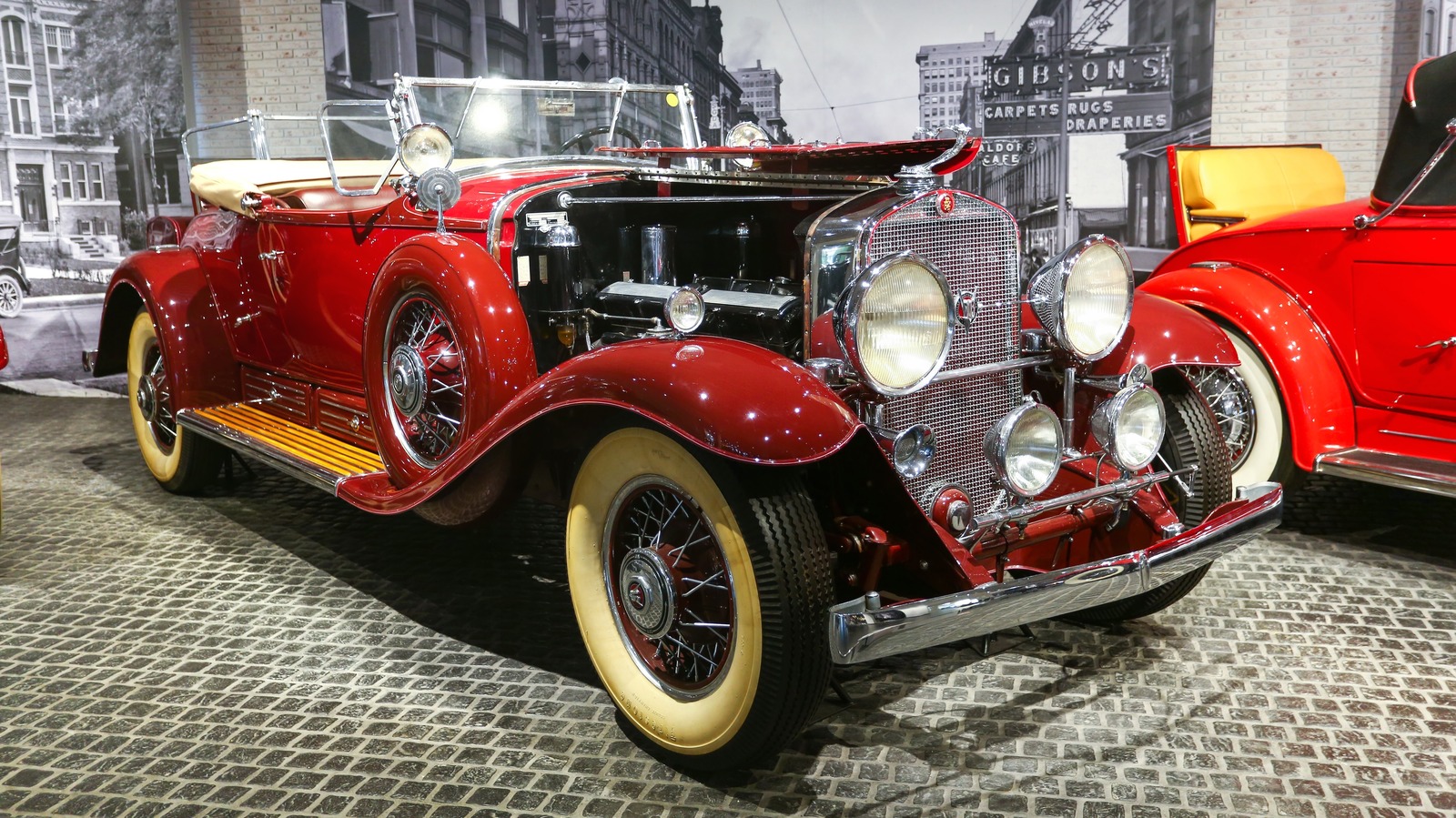
Despite their rarity, V16s have made a few memorable appearances over the years. One of the first cars to use a V16 engine was the 1929 Maserati Tipo V4, which used two 26B straight-eight engines connected by a crankcase that housed two crankshafts. The two banks of cylinders were g.