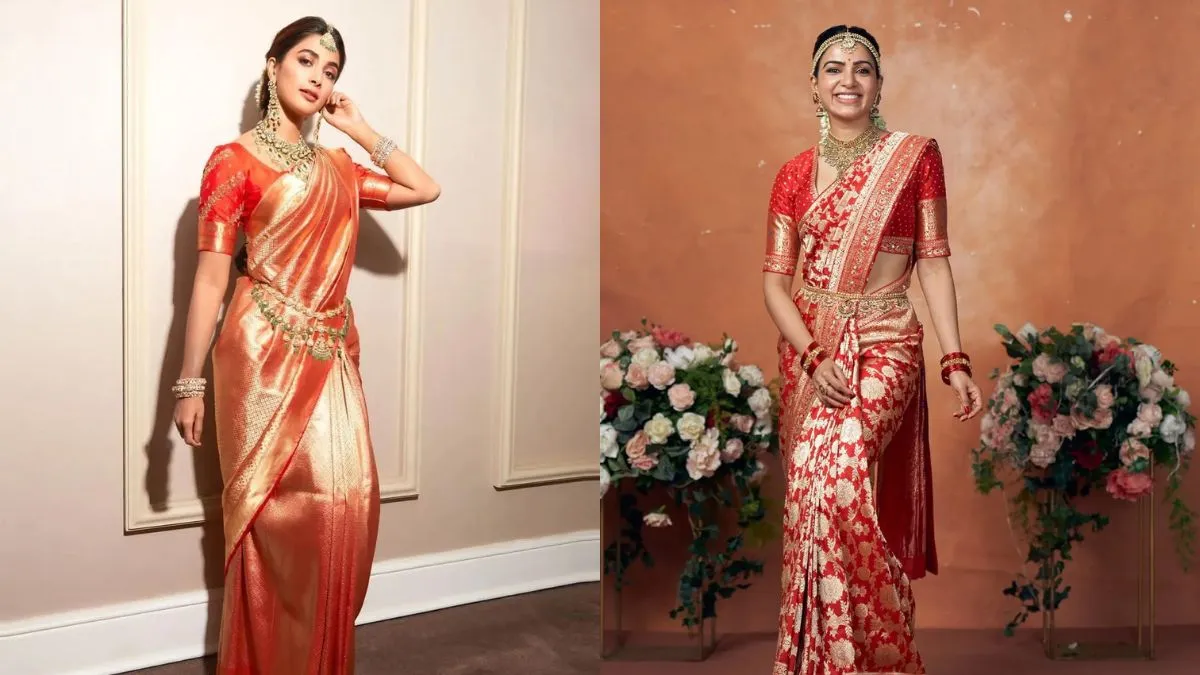


Kanjivaram Saree vs Banarasi Saree: The saree is a timeless symbol of elegance, tradition and femininity for every Indian woman, considered to be one of the most treasured possessions. Among the various types of sarees, silk sarees hold immense value in Indian culture, representing luxury, sophistication and heritage. Two of the most revered and sought-after silk drapes are the Kanjivaram saree and the Banarsi saree.
These iconic sarees are not only stunning pieces of art but also carry a rich cultural significance, making them a coveted part of every woman's wardrobe. But do you know the difference between these two sarees? If not, then explore the distinction between Kanjivaram saree and Banarasi saree that will help you before buying. Difference Between Kanjivaram Saree And Banarasi Saree Origin Kanjivaram saris originate from Kanchipuram, Tamil Nadu while Banarasi saris are crafted in Varanasi, Uttar Pradesh.

Kanjivaram sarees boast rich silk and opulent zari work, featuring temple-inspired motifs. In contrast, Banarasi saris are prized for intricate brocade work adorned with floral, paisley or Mughal-inspired designs. Weaving Technique Kanjivaram sarees are handwoven with a focus on durability, featuring a unique interlocking technique where the body and border are woven separately.
In contrast, Banarasi sarees employ the intricate brocade technique, showcasing elaborate patterns and opulent gold and silver zari work. Motifs And Patterns Kanjivaram sarees feature traditi.